
October 2026
A. Table of Contents
B. Editorial
Poly-Foam 2026; Suzhou, Oct. 13-15
Foam Update will host the tenth International Foam Conference on Oct. 13-15 at the Shangri-la Hotel in Suzhou. The conference operation is being assisted by the Inter Foam group. The theme is ‘Specialty Foam,’ highlighting the diversified performance requirements for foam in a wide variety of businesses in an ever-demanding market. It can be imagined that the function groups in the specialty polymer could increase its material strength and/or foaming capability via the bonding and debonding of the chemical or physical connections to simply offer another dimension over the crystallinity and branching structure of the conventional thermoplastic materials. It will surely make the knowledge-technology-business cycle more fascinating than before. The attached illustration shows the near final program for the auditorium on Oct. 13 which is designed to help the practitioners in solving problems in daily operation, and the conference program for Oct. 14-15. Registration information is also attached. Electronic versions of power point (PPT) from the presenters will be provided bilingually, in Chinese and English—to be distributed at conference check in. For attendees who need interpretation, the use of an interpreting tool such as ChatGPT is highly recommended to help them make the most of the presentations. An exhibition will also be set up to encourage more focused discussions and interactions between exhibitors and attendees.
It is anticipated that this gathering is a valuable opportunity for the creative young blood and the seasoned experts to come together, exchange ideas, and facilitate the transfer of the torch, making the foam platform more fruitful into the future. New business is always a driving force to push the platform forward. Understanding how innovation is formed is more critical than ever in the investment of new technology. Yet it is always a plus in renewing friendship and picking up new knowledge and skill set in this unique event. We are looking forward to seeing our fellow experts in foam and emerging stars at this conference.
Editorial Office
|
About Poly-Foam 2026 Foam Update is planning to host the 10th Global Poly-Foam Conference Oct. 13-15, 2026 at Suzhou. Its theme is Specialty Foam. Oct. 13 is dedicated to the Expert Auditorium, which is for on-the-job training from well-known experts, 14-15 for technical presentations from well-known speakers. An exhibition area will be established to strengthen the knowledge-manufacturing-business cycle. Both conventional foam markets and innovations; such as automotive, construction, packaging, insulation, footwear, semiconductors, medical, and health care, are welcome. In the last three decades there has been no major breakthrough in foaming technology; yet social awareness and quest for innovation continue to increase, especially nowadays, business is driving manufacturing more than before. How to meet or exceed customers’ expectations in a timely manner and how to renew the foaming technical skill set become critical. Moreover, the specialty polymer provides chemical groups that the conventional polymers (i.e. PE, PP, and PS) could not. The chemical groups can interact with blowing agents to create novel performances for advanced applications to a higher level. However, the chemical group may cause adverse effects in manufacturing. This development process could be more complex, yet more rewarding. It is our hope to get together quality scientific and technical staff from industry, research institutes, and college together in the conference to constructive interactions to generate ideas to improve processing efficiency and product quality. They can not only make manufacturing and R&D more robust but also make new products’ delivery more profitable. |
| Expert Auditorium
Oct. 13, 2026 At Shangri-la Hotel 8:30-9:45 Some Challenges in Foam Product Formation: Corrugation at Foaming and Dimensional Stability after Foaming S. T. Lee, Foam Update 9:45 咖啡/茶歇 Coffee/Tea break 10:15-11:30 Semi-Continuous Foaming Analysis for X-linked and non-X-linked Elastomer using Supercritical Fluid Technique 翟文涛;中山大学, Wentao Zhai; Sun Yat-Sen Univ. 12:00 午餐Lunch 13:30-14:45 Polymer Supercritical Micromolecular Foaming Technology and Application 王桂龙; 山东大学, Guilong Wang; Shandong Univ. 14:45 咖啡/茶歇 Coffee/Tea break 15:15-16:30 Processing and Equipment for Foamed Plastics Formation Peng Guo |
| Technical Program for Poly-Foam 2026 at Shangri-la Hotel
Oct. 14, 2026 8:30-8:50 Opening Remarks S. T. Lee; Foam Update Business Driven Era for Foam Moderator: 8:50-9:30 From Knowledge to Technology to Business: A Scientist’s Journey from Discovery to Business Xi Huang, FE:I Beauty Tech. Inc. 9:30-10:10 Achieving Ultra-High Electromagnetic Wave Absorption of Lightweight and Flexible Polyamide Composites via Customizing Microcellular Architecture Menglong Xu, Shandong Univ. 10: 10 Coffee/Tea break Environmental Topics Moderator: Sai Wang; Shenzhen Polytechnic Univ. 10: 40-11:20 Research on Fully Biodegradable PBST Foam Peng Guo, Sinopec Beijing Research Institute of Chemical Industry 11:20-12:00 Preparation and Performance of Recyclable EVA Foam Materials Minggang Li, Changchun Institute of Applied Chemistry, Chinese Academy of Sciences 12:00-12: 30 In-Situ High-Pressure Characterization of Condensed Structure Evolution in Polymer/Supercritical Fluid Systems Lei, Zhang, Shandong Univ. 12:30-14:00 Lunch (sponsored by Formosa Plastics Corp.) New Products Moderator: Wentao Zhai, Sun Yat-Sen Univ. 14:00-14:40 Research on Key Technologies of Polyphenylene Oxide Foam Materials Chunling Xin, Beijing University of Chemical Technology 14:40-15:20 Foaming Behavior of PS/PMMA Blends and Alternating Multilayered Assemblies Yongyan Pang, Ningbo Institute of Materials Technology and Engineering, Chinese Academy of Sciences 15:20-16:00 Tunable Micro/Nano Cellular Cyclic Olefin Copolymer Foam with Micro Phase Separation Ruiyan Zhang, Ningxia Univ. 16:00-16:40 Supercritical CO2Foaming under Confinement and Its Applications Haoyan Mi, Zhengzhou Univ. 16:40 Coffee/Tea break 17:00-18:30 Presentations by Exhibitors Moderator: Wang Sai 18:30-20:00 Banquet Oct. 15, 2026 Research & Development and SCF Moderator: TBD 8:00-8:40 Active Control of Cell Nucleation through Crystallization Kinetics Control of Semicrystalline Polymers in Various Processes.”
8:40-9:20 Thickness Scale Effect in Polymer Foaming: Residual Concentration-Dominated Mechanism Wentao Zhai; Sun Yat-Sen Univ. 9:20-10:00 Supercritical Fluid Foaming of Crosslinked Polymers: Lightweight, High Strength, and Circularity Jun Wang, The Hong Kong Univ. of Science and Technology 10:00-10:40 Regulation of Crystallization Behavior and Performance Optimization of TPE Foams Using Supercritical Fluids Sai Wang, Shenzhen Polytechnic Univ. 10:40 Coffee/Tea break Novel PLA Foams Moderator: TBD 11:10-11:40 Preparation and Applications of PLA Composite Foam Jinchuan Zhao, Hainan Univ. 11:40-12:10 Fabrication and Applications of High-Performance PLA Foams Long Wang, Ningbo Institute of Materials Technology and Engineering, Chinese Academy of Sciences 12:10-12:50 Synergistic Toughening of PLA and Its Multifunctional Microcellular Materials by Supercritical CO2 and In-situ Microfibers Guilong Wang, Shandong Univ. 12:50-13:00 Concluding Remarks
13:00-14:30 Lunch Foam Update reserves the right to make revisions for the final version. |
| Conference Information
Date: Oct. 13-15, 2026 Oct. 13 for Expert Auditorium, Oct. 14-15 for Conference, Attendee needs to prepare personal interpreter. Location: Shangri-La Hotel, Suzhou, China Registration Fee Chart: Advance cut-off date: Registration and payment must be received by Sep. 30, 2026. Please circle the amount. Conference: ¥ 3,960 or $600 (advance)/ ¥ 4,400 or $665 (regular) Student: ¥ 2,250 (advance)/ ¥ 2,500 (regular) Expert Auditorium: ¥ 1,950 (advance)/ ¥ 2,200 (regular) for Expert Auditorium only. ¥ 1,150 (advance)/ ¥ 1,400 (regular) for conference registrant ¥ 1,000 for student Exhibition: ¥ 9,000 (advance)/ ¥ 11,000 (regular) (exhibition includes one delegate for the conference) Please contact us for sponsoring breaks, lunch, or banquet Local Reps: Doria Fang; 13501016103 (Inter Foam) Dr. Wang Sai; 18246141984 (Shenzhen Polytechnic Univ.) |
| Registration Form
Name: _________________________________________ Title: ___________________________________________ Company: ______________________________________ Address: ________________________________________ Email: __________________________________________ Cell Phone: _____________________________________
Payment Method: in ¥ or $; by credit card (Visa/Master Card/ AMEX) Cardholder Name:_______________________________ Card Number: ___________________________________ Expiration Date: __________________________________ Signature: _______________________________________
Please e-mail the completed form to Matthew@foamupdate.com |
C. News
| POLY-FOAM 2026 SUZHOU; OCT. 13-15 | ||
| Author(s) | N/A | |
| Sources | Announcement | |
| Corporate/Assignee | Foam Update | |
| Publication Date | Sep. 2026 | |
| Abstract: | ||
| This tenth Poly-Foam Conference will be hosted by Foam Update; assisted by Inter Foam from Oct. 13 to 15 at Shangri-La hotel Suzhou, China. Oct. 13 will be dedicated to Expert Auditorium by the well-recognized teachers to equip the foam practitioners with updated and organized principles to sharpen their “solve problem” skill set. Conference programs and exhibition will be presented on Oct. 14 and 15. Its theme is Specialty Foam to encourage more in-depth communication on the updated developments of foam innovation. | ||
| INTERFOAM CHINA, DEC. 9-11, SHANGHAI | ||
| Author(s) | N/A | |
| Sources | Announcement | |
| Corporate/Assignee | Interfoam | |
| Publication Date | Sep., 2026 | |
| Abstract: | ||
| Interfoam China 2026 will take place at Shanghai from December 9-11, 2026, at the Shanghai New International Expo Centre (SNIEC) at Pudong Shanghai. It is a premium foam exhibition in Asia. It will draw a wide variety of business; conventional and innovative alike. Also offered are speeches from experts across the globe in the technical forefronts and latest innovations. | ||
| SNEAKER MARKET 2026 TO 2034 | ||
| Author(s) | N/A | |
| Sources | Press release | |
| Corporate/Assignee | Intelmarket Resaerch | |
| Publication Date | Aug. 21, 2026 | |
| Abstract: | ||
| Global Sneaker Market size was valued at USD 92 billion in 2025.The market will grow from USD 95 billion in 2026 to USD 148 billion by 2034, exhibiting a CAGR of 5.4% during the forecast period. Reflecting recent market moderation, the compound annual growth rate has been refined to 5.4%. Sneakers combine athletic performance features with everyday style, serving both sport‑specific activities and casual wear across diverse consumer segments. The category blends advanced cushioning, breathable uppers and durable outsoles with fashion‑forward designs, enabling users to transition seamlessly from gym sessions to urban environments. Key factors include the rise of athleisure culture, influencer‑led collaborations and expanding e‑commerce channels that accelerate product launches and consumer engagement. |
||
D. Patents and Journals
a. New Foaming Technique
| METHOD OF FORMING A CONTACT PIECE FOR A CIRCUIT BREAKER | ||
| Inventor(s) | Kenel, C., Hoidis, M., and Delachaux, T. | |
| Sources | US Pat.: 12,734,725 | |
| Corporate/Assignee | ABB Schweiz AG | |
| Publication Date | Sep. 15, 2026 | |
| Abstract: | ||
| A method for forming a contact piece for a circuit breaker, the contact piece comprising a reinforcement phase and a conductive phase, the method comprising: providing a slurry of the reinforcement phase in liquid; freeze casting the slurry, to form a cast comprising a frozen liquid structure and a reinforcement phase structure; removing the frozen liquid structure from the cast, to form a foam comprising the reinforcement phase structure; sintering the foam, to form a sintered foam; and infiltrating the sintered foam with the conductive phase, to form a piece part. | ||
| PROCESS FOR FOAMING USING CARBON DIOXIDE SOLUTION | ||
| Inventor(s) | Bai, P. and Zhang, Z. | |
| Sources | US Pat.: 12,735,544 | |
| Corporate/Assignee | DMN Material Technology (Jiangsu) Ltd. | |
| Publication Date | Sep. 15, 2016 | |
| Abstract: | ||
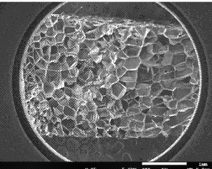 The invention relates to a foaming process using carbon dioxide solution, comprising: put a parison into the carbon dioxide solution for primary foaming, remove and put the parison into the carbon dioxide solution for secondary foaming to get the foam product. Compared with foaming process using high-pressure gas directly, the foaming process using polar liquid system can get a uniform foam structure with high foaming rate faster, and has good foaming effect for high crystalline polymers. To control the change of temperature and pressure after the introduction of carbon dioxide, the impact and penetration of carbon dioxide on the surface of the crosslinked material can be controlled first, and the solubility of carbon dioxide in the polar system can be improved by further increasing pressure and temperature, thereby promoting the formation of uniform foam structure with high foaming rate in the subsequent heat foaming process. The invention relates to a foaming process using carbon dioxide solution, comprising: put a parison into the carbon dioxide solution for primary foaming, remove and put the parison into the carbon dioxide solution for secondary foaming to get the foam product. Compared with foaming process using high-pressure gas directly, the foaming process using polar liquid system can get a uniform foam structure with high foaming rate faster, and has good foaming effect for high crystalline polymers. To control the change of temperature and pressure after the introduction of carbon dioxide, the impact and penetration of carbon dioxide on the surface of the crosslinked material can be controlled first, and the solubility of carbon dioxide in the polar system can be improved by further increasing pressure and temperature, thereby promoting the formation of uniform foam structure with high foaming rate in the subsequent heat foaming process. |
||
| ENHANCED FOAM FRACTIONATION OF OIL PHASE FROM AQUEOUS/OIL MIXED PHASE VIA INCREASED VISCOELASTICITY | ||
| Inventor(s) | Man, V. F-P., DeNoma, M. C., and Lentsch, S. E. | |
| Sources | US Pat.: 12,729,140 | |
| Corporate/Assignee | Ecolab USA Inc. | |
| Publication Date | Sep. 8, 2026 | |
| Abstract: | ||
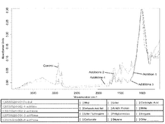 The present invention provides improved methods for purifying and/or removing oily particles, and/or contaminants suspended or dissolved in water. In particular the process relates to an additive composition that has the appropriate surfactant characteristics for effectively removing an oil phase from an oil/aqueous mixed phase via foam fractionation. According to the invention, a hydrophobically modified polymer that acts as an associative thickener is combined with surfactant in appropriate ratios to facilitate oil removal for water purification in any of a number of commercial, environmental and industrial applications. The present invention provides improved methods for purifying and/or removing oily particles, and/or contaminants suspended or dissolved in water. In particular the process relates to an additive composition that has the appropriate surfactant characteristics for effectively removing an oil phase from an oil/aqueous mixed phase via foam fractionation. According to the invention, a hydrophobically modified polymer that acts as an associative thickener is combined with surfactant in appropriate ratios to facilitate oil removal for water purification in any of a number of commercial, environmental and industrial applications. |
||
| COMPOSITION AND METHOD FOR A ROOT CANAL FILLING | ||
| Inventor(s) | Saghiri, M. A. | |
| Sources | US Pat.: 12,728,078 | |
| Corporate/Assignee | Rutgers, The State Univ. of New Jersey | |
| Publication Date | Sep. 8, 2026 | |
| Abstract: | ||
| Compositions and methods for the synthesis of polymer foam materials, wherein the polymer foam materials include expandable polymers, which can be applied to many dental applications, such as for example but not limited to one or more of a filler, a sealer, a filling, and a root canal. The expandable polymers can include a cross linkable material that expands upon crosslinking. | ||
| SURFACTANTS FOR SHAPE MEMORY POLYMER FOAM SYNTHESIS | ||
| Inventor(s) | Monroe, M. B. and Petryk, N. M. | |
| Sources | US Pat. App.: 20260286049 | |
| Corporate/Assignee | Syracuse Univ. | |
| Publication Date | Sep. 24, 2026 | |
| Abstract: | ||
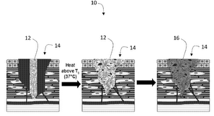 A readily available and inexpensive surfactant for shape memory polymer foam formation. The surfactant is used as a pore stabilizer during polymerization in the presence of a blowing agent. The surfactant is formed by reacting a conventional surfactant having a free reactive group, such as a hydroxyl group, an amine group, or a carboxylic acid group, with an isocyanate to form a urethane, urea, or amide bond, respectively, at the location of the reactive group. An exemplary surfactant is polyethoxylated castor oil that has been reacted with 3-(triethoxysilyl)propyl isocyanate, to form macroglycerol ricinoleate urethane 3-(triethoxysilyl)propyl. A readily available and inexpensive surfactant for shape memory polymer foam formation. The surfactant is used as a pore stabilizer during polymerization in the presence of a blowing agent. The surfactant is formed by reacting a conventional surfactant having a free reactive group, such as a hydroxyl group, an amine group, or a carboxylic acid group, with an isocyanate to form a urethane, urea, or amide bond, respectively, at the location of the reactive group. An exemplary surfactant is polyethoxylated castor oil that has been reacted with 3-(triethoxysilyl)propyl isocyanate, to form macroglycerol ricinoleate urethane 3-(triethoxysilyl)propyl. |
||
| LOW-SWELL FOAM COMPOSITION | ||
| Inventor(s) | Jayakody, C. and Thornton, B. | |
| Sources | US Pat. App.: 20260265521 | |
| Corporate/Assignee | Porex Corp. | |
| Publication Date | Sep. 17, 2026 | |
| Abstract: | ||
 Provided herein is a low-swell foam comprising a prepolymer component and an aqueous component comprising water and a polyacrylonitrile fiber, wherein the polyacrylonitrile fiber comprises 0.10% to 1.00% of the aqueous component by weight, and the prepolymer component and the aqueous component are mixed together, and excess water is removed, to form the low-swell foam. Provided herein is a low-swell foam comprising a prepolymer component and an aqueous component comprising water and a polyacrylonitrile fiber, wherein the polyacrylonitrile fiber comprises 0.10% to 1.00% of the aqueous component by weight, and the prepolymer component and the aqueous component are mixed together, and excess water is removed, to form the low-swell foam. |
||
b. Blowing Agents
| STABILIZING POLYOL PREMIXES, KITS, AND FOAM COMPOSITIONS CONTAINING HALOGENATED OLEFINS | ||
| Inventor(s) | Biber, N. H., Chen, B. B., Sharp, M. T., Costa, J. S., Clarkson, L., and Scholte, J. | |
| Sources | WO-A1-2026183154 | |
| Corporate/Assignee | Arkema Inc. | |
| Publication Date | Sep. 3, 2026 | |
| Abstract: | ||
| A storage-stable polyol premix is disclosed comprising: a halogenated physical blowing agent comprising an HFO, an HFCO, or a combination thereof; one or more polyols; a catalyst system comprising (i) a non-oxygen-containing tertiary amine and (ii) an organometallic compound comprising at least one metal from Groups 13-15 of the Periodic Table of Elements; an epoxide acid scavenger containing an epoxy moiety; and optionally one or more additives. Foam compositions comprising the storage stable polyol premix and an isocyanate (source), as well as kits comprising the polyol premix and isocyanate components in separate vessels, is also described. | ||
c. Foam Products
| FOAMABLE SILICONE COMPOSITION | ||
| Inventor(s) | Xu, Y. and Gao, A. | |
| Sources | US Pat.: 12,747,330 | |
| Corporate/Assignee | Wacker Chemie AG | |
| Publication Date | Sep. 29, 2026 | |
| Abstract: | ||
| Foamable silicone compositions, containing (A) at least one organopolysiloxane containing at least two alkenyl groups bonded to silicon per molecule, (B) at least one organopolysiloxane containing at least two hydrogen atoms bonded to silicon per molecule, (C) at least one porogenic agent generating gaseous hydrogen in the presence of component (B), and (D) at least one hydrosilylation catalyst. Foams obtained by curing such foamable silicone compositions have excellent resilience, moderate hardness, good mechanical properties, and flame retardancy, suitable for the sealing of battery pack cases. | ||
| CO-EXTRUDED SHEET | ||
| Inventor(s) | Taniguchi, S., Yusa, A., Yamamoto, S., Goto, T., and Mizutani, K. | |
| Sources | US Pat.: 12,746,742 | |
| Corporate/Assignee | Maxell, Ltd. | |
| Publication Date | Sep. 29, 2026 | |
| Abstract: | ||
| A co-extruded sheet reduces swelling and/or cracking of the surface occurring during thermal shaping such as vacuum forming and provides improved mechanical strength. A co-extruded sheet contains a polycarbonate resin, and includes a core layer formed from a foam resin and skin layers formed from a non-foaming resin. The skin layer is laminated to one major surface of the core layer, while the skin layer is laminated to the other major surface of the core layer. The co-extruded sheet has a density of 0.4 to 0.9 g/cm.sup.3. The co-extruded sheet has a thickness of 1 to 5 mm and satisfies expression (1): 0.10≤(t1+t2)/T≤0.5. In expression (1), t1 indicates the thickness of the skin layer, t2 indicates the thickness of the second skin layer, and T indicates the thickness of the co-extruded sheet. | ||
| SYSTEM AND METHOD FOR ADDITIVE MANUFACTURING OF AN OBJECT WITH FOAM INFILL MATERIAL | ||
| Inventor(s) | Cockowski, L. F., Danielescu, L. A., and Pacik-Nelson, N. G. | |
| Sources | US Pat.: 12,746,719 | |
| Corporate/Assignee | Accenture Global Solutions Ltd. | |
| Publication Date | Sep. 29, 2026 | |
| Abstract: | ||
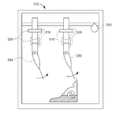 System and method for additive manufacturing of an object with foam infill material is disclosed. The method includes, determining a shell portion of the object using a three-dimensional model of the object, determining one or more locations in the shell portion for providing access to an interior of the shell portion, determining a foam infill material for additive manufacturing based on one or more fill material characteristics, and determining an amount of the foam infill material needed to fill the interior of the shell portion. The method further includes, fabricating the shell portion of the object, depositing the amount of foam infill material at the one or more determined locations to fill the interior of the shell portion, and fabricating the shell portion of the object to complete fabrication of the object. System and method for additive manufacturing of an object with foam infill material is disclosed. The method includes, determining a shell portion of the object using a three-dimensional model of the object, determining one or more locations in the shell portion for providing access to an interior of the shell portion, determining a foam infill material for additive manufacturing based on one or more fill material characteristics, and determining an amount of the foam infill material needed to fill the interior of the shell portion. The method further includes, fabricating the shell portion of the object, depositing the amount of foam infill material at the one or more determined locations to fill the interior of the shell portion, and fabricating the shell portion of the object to complete fabrication of the object. |
||
| MULTI-FUNCTIONAL ACOUSTICAL FOAM BOARD | ||
| Inventor(s) | Mikes, K. F., Hartmann, M. H., Girolmo, M. G., and Babineau Jr., F. J. | |
| Sources | US Pat.: 12,741,444 | |
| Corporate/Assignee | Johns Manville | |
| Publication Date | Sep. 22, 2026 | |
| Abstract: | ||
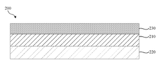 An insulation component, comprising a first foam layer having a first density and a second foam layer coupled to the first foam layer. The second foam layer has a second density less than the first density. The first and second foam layers comprise a similar material. The insulation component includes an average sound absorption coefficient between 0.1 and 0.4. An insulation component, comprising a first foam layer having a first density and a second foam layer coupled to the first foam layer. The second foam layer has a second density less than the first density. The first and second foam layers comprise a similar material. The insulation component includes an average sound absorption coefficient between 0.1 and 0.4. |
||
| COMPOSITION FOR SELF-SUCTION ADHERING FOAM SHEET AND SELF-SUCTION ADHERING FOAM LAMINATE SHEET | ||
| Inventor(s) | Nishimura, S. and Ashida, S. | |
| Sources | US Pat.: 12,735,606 | |
| Corporate/Assignee | Zeon Corp. | |
| Publication Date | Sep. 15, 2026 | |
| Abstract: | ||
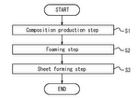 Provided is a composition for a self-suction adhering foam sheet that can be used to obtain a self-suction adhering foam laminate sheet having little decline of self-adhesive strength over time. The composition for a self-suction adhering foam sheet contains a polymer, an oxazoline cross-linker, and a wax agent. Provided is a composition for a self-suction adhering foam sheet that can be used to obtain a self-suction adhering foam laminate sheet having little decline of self-adhesive strength over time. The composition for a self-suction adhering foam sheet contains a polymer, an oxazoline cross-linker, and a wax agent. |
||
| METHOD FOR PRODUCING CORRUGATED LAMINATED PANELS | ||
| Inventor(s) | Coroneo, M., Ottens, A., and Siler, C. J. | |
| Sources | US Pat. App.: 20260284941 | |
| Corporate/Assignee | Dow Global Technologies LLC | |
| Publication Date | Sep. 24, 2026 | |
| Abstract: | ||
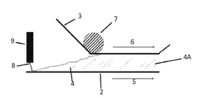 Corrugated laminated panels (1) are produced by dispensing a reactive foam formulation (4) onto a corrugated facing layer (2), positioning a top facing layer (3) above the reactive foam formulation and then curing the foam formulation so it expands to occupy the space between the facing layers to form a cured foam layer adhering to both facing layers. The reactive foam formulation is dispensed only onto flat areas of the corrugated facing layers, and not the corrugations (13). Some of the reactive formulation drains into the corrugations where it cures to fill the corrugations with foam. The panels have few defects and exhibit good adhesion between the cured foam and the facing layers. Corrugated laminated panels (1) are produced by dispensing a reactive foam formulation (4) onto a corrugated facing layer (2), positioning a top facing layer (3) above the reactive foam formulation and then curing the foam formulation so it expands to occupy the space between the facing layers to form a cured foam layer adhering to both facing layers. The reactive foam formulation is dispensed only onto flat areas of the corrugated facing layers, and not the corrugations (13). Some of the reactive formulation drains into the corrugations where it cures to fill the corrugations with foam. The panels have few defects and exhibit good adhesion between the cured foam and the facing layers. |
||
| FOAM BODY FOR SENSORS USED WITH PEDESTRIAN SAFETY | ||
| Inventor(s) | El Far, B. J. H., Calder, D., and Arias, B. B. | |
| Sources | US Pat. App.: 20260274186 | |
| Corporate/Assignee | Rivian IP Holdings, LLC | |
| Publication Date | Sep. 17, 2026 | |
| Abstract: | ||
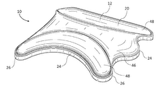
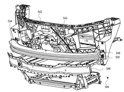 A vehicle includes a body (e.g., foam body) designed to compress in response to an applied force. The body includes cut out portions to reduce the amount of applied force required to compress the body in order for the body to compress and become detectable by a sensor. The body may be attached to a bracket and a lamp carrier, with the bracket providing stiffness and facilitation of the compression of the body. A vehicle includes a body (e.g., foam body) designed to compress in response to an applied force. The body includes cut out portions to reduce the amount of applied force required to compress the body in order for the body to compress and become detectable by a sensor. The body may be attached to a bracket and a lamp carrier, with the bracket providing stiffness and facilitation of the compression of the body. |
||
| PET TOY AND METHOD OF MANUFACTURING SAME | ||
| Inventor(s) | Wilhelm, J., Bagley, R., and Ngyyen, V. V. | |
| Sources | US Pat. App.: 20260271882 | |
| Corporate/Assignee | Doskocil Manufacturing Co., Inc. | |
| Publication Date | Sep. 17, 2026 | |
| Abstract: | ||
 A method of manufacturing a pet toy includes preforming one or more rubber compound sheets, preforming a foam rubber core in a desired shape, enclosing the foam rubber core within the one or more rubber compound sheets so that the foam rubber core forms an inner part and the one or more rubber compound sheets form an outer part, and coating the outer part enclosing the inner part. A method of manufacturing a pet toy includes preforming one or more rubber compound sheets, preforming a foam rubber core in a desired shape, enclosing the foam rubber core within the one or more rubber compound sheets so that the foam rubber core forms an inner part and the one or more rubber compound sheets form an outer part, and coating the outer part enclosing the inner part. |
||
| A PUNCHING BAG | ||
| Inventor(s) | Angelo Jorge Frota, M. and Ratao Batista Barata, P. J. | |
| Sources | US Pat. App.: 20260273369 | |
| Corporate/Assignee | BHT Unipessoal., Lda. | |
| Publication Date | Sep. 17, 2026 | |
| Abstract: | ||
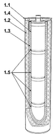 The present application describes a punching bag (1) comprised by a multi-material and multi-layer structure, that provides a combination of materials that allow to achieve a consistency similar to a human body, creating a very realistic training experience. The punching bag comprises a body having an outer synthetic leather surface (1.1), the body being formed by a two-layered foam structure (1.2, 1.3), each layer having a different density, and by a core part constituted by a bladder structure (1.4) comprised by at least one bladder, wherein said bladder is a container for liquid storage. The present application describes a punching bag (1) comprised by a multi-material and multi-layer structure, that provides a combination of materials that allow to achieve a consistency similar to a human body, creating a very realistic training experience. The punching bag comprises a body having an outer synthetic leather surface (1.1), the body being formed by a two-layered foam structure (1.2, 1.3), each layer having a different density, and by a core part constituted by a bladder structure (1.4) comprised by at least one bladder, wherein said bladder is a container for liquid storage. |
||
| POLYCARBONATE FOAM MATERIAL, PRECURSOR COMPOSITION AND KIT THEREOF | ||
| Inventor(s) | Abbasoglu, T., Irusta Maritxalar, H. | |
| Sources | US Pat. App.: 20260265457 | |
| Corporate/Assignee | BasqueCenter for Macromolecular Design and Engineering, Polymat Fundazioa and Universidad Del Pais Vasco/Euskal Herriko Unibertsitatea | |
| Publication Date | Sep. 10, 2026 | |
| Abstract: | ||
| A composition useful for the formation of polycarbonate foams with no need of external blowing agent and a process for the preparation of a polycarbonate foam, a polycarbonate foam resulting from the process and a kit of parts for the preparation of a polycarbonate foam are disclosed. | ||
| GLAZING HAVING IMPROVED SOUNDPROOFING PERFORMANCE | ||
| Inventor(s) | Abbad, A. and Mercier, G. | |
| Sources | US Pat. App.: 20260266125 | |
| Corporate/Assignee | Saint-Gobain Glass France | |
| Publication Date | Sep. 10, 2026 | |
| Abstract: | ||
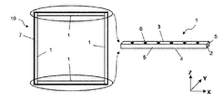 A glazing includes at least two glazed walls forming a cavity therebetween, wherein the cavity includes at least one acoustic insulation device including at least one polymer foam plate, the polymer foam plate including a plurality of perforations that are arranged periodically and define a chamber arranged in the cavity. A glazing includes at least two glazed walls forming a cavity therebetween, wherein the cavity includes at least one acoustic insulation device including at least one polymer foam plate, the polymer foam plate including a plurality of perforations that are arranged periodically and define a chamber arranged in the cavity. |
||
| FOAM COMPOSITION COMPRISING PARTIALLY HYDROLYSED COLLAGEN | ||
| Inventor(s) | Hadley, S. and Bowden, W. | |
| Sources | US Pat. App.: 20260265441 | |
| Corporate/Assignee | Scottish Leather Group Ltd. and Trans Paragon Global Ltd. | |
| Publication Date | Sep. 10, 2026 | |
| Abstract: | ||
 The invention relates to a foam composition for use in the manufacture of a foam article, the foam composition comprising: 15% w/w to 50%/w/w partially hydrolysed collagen; ii. 30%/w/w to 60%/w/w one or more polyols; iii. 15% w/w to 40%/w/w cross-linking agent; and iv. 0.5%/w/w to 3%/w/w organic acid, wherein the partially hydrolysed collagen has a Bloom gel strength score of between 300 g and 600 g as measured according to the method defined in ISO9665. The invention further relates to a method of producing a foam article using the same foam composition. The invention further relates to a foam article produced using the method of the present invention. The invention relates to a foam composition for use in the manufacture of a foam article, the foam composition comprising: 15% w/w to 50%/w/w partially hydrolysed collagen; ii. 30%/w/w to 60%/w/w one or more polyols; iii. 15% w/w to 40%/w/w cross-linking agent; and iv. 0.5%/w/w to 3%/w/w organic acid, wherein the partially hydrolysed collagen has a Bloom gel strength score of between 300 g and 600 g as measured according to the method defined in ISO9665. The invention further relates to a method of producing a foam article using the same foam composition. The invention further relates to a foam article produced using the method of the present invention. |
||
| FOAM SHEET AND PRESSURE-SENSITIVE ADHESIVE TAPE | ||
| Inventor(s) | Matsukawa, H., Senga, D., and Handa, A, | |
| Sources | US Pat. App.: 20260264364 | |
| Corporate/Assignee | Sekisui Chemical Co., Ltd. | |
| Publication Date | Sep. 10, 2026 | |
| Abstract: | ||
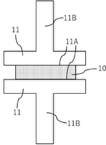 A multilayer foam sheet including: a base material layer including a foam layer; and a resin layer including a foam layer or a non-foam layer on at least one side of the base material directly or via another layer; wherein the multilayer foam sheet has a stress relaxation rate of 25% or more; and the multilayer foam sheet has a tensile strength of 1.6 MPa or more. A multilayer foam sheet including: a base material layer including a foam layer; and a resin layer including a foam layer or a non-foam layer on at least one side of the base material directly or via another layer; wherein the multilayer foam sheet has a stress relaxation rate of 25% or more; and the multilayer foam sheet has a tensile strength of 1.6 MPa or more. |
||
| HIGH-STRENGTH AGRICULTURAL FOAM | ||
| Inventor(s) | Bellefroid, E. and Brundnicki, P. A. P. | |
| Sources | US Pat. App.: 20260265479 | |
| Corporate/Assignee | Brekland Inc. | |
| Publication Date | Sep. 10, 2026 | |
| Abstract: | ||
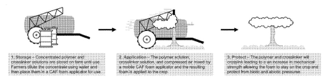 The present disclosure provides hydrogel foam compositions with high mechanical strength and methods of protecting plants by applying the hydrogel foam compositions to the plants. The present disclosure particularly provides foamed hydrogel compositions comprising a polymer solution and a crosslinker solution, which can be useful as a new modality of crop protection. The present disclosure provides hydrogel foam compositions with high mechanical strength and methods of protecting plants by applying the hydrogel foam compositions to the plants. The present disclosure particularly provides foamed hydrogel compositions comprising a polymer solution and a crosslinker solution, which can be useful as a new modality of crop protection. |
||
| POLYPROPYLENE COMPOSITION FOR PREPARING A FOAM AND A FOAM COMPRISING THE SAME | ||
| Inventor(s) | Tynys, A. T. and Reichelt, N. | |
| Sources | US Pat. App.: 20260358235 | |
| Corporate/Assignee | Borealis AG | |
| Publication Date | Sep. 3, 2026 | |
| Abstract: | ||
| The present application provides a polypropylene composition for preparing a foam. The polypropylene composition comprises: (a) at least 40.0 wt. % of a long chain branched polypropylene, and (b) at least 20.0 wt. % of a linear polypropylene, wherein the weight amounts are based on the total weight of the polypropylene composition, and wherein the polypropylene composition has a melt flow rate MFR.sub.2 (ISO 1133, 2.16 kg load, 230° C.) of at least 2.5 g/10 min. Furthermore, a foam is provided which comprises said polypropylene composition as well as processes for preparing said polypropylene composition and said foam. | ||
| FOAM COMPOSITION INCLUDING SURFACE-MODIFIED NANOPARTICLES AND RELATED ARTICLES AND PROCESSES | ||
| Inventor(s) | Werness, J. B., Stegnik, D. W., Purgett, M. D., Gregar, T. Q., Thomas, C. S., Orrock, J. A., Kim, Y., Elliott, P. J., Mackey, S. S., Unverhau, K., Bergman, J. A., and Rathore, J. S. | |
| Sources | US Pat. App.: 20260258213 | |
| Corporate/Assignee | 3M Innivative Properties Co. | |
| Publication Date | Sep. 3, 2026 | |
| Abstract: | ||
| A foam composition includes a vehicle, surface-modified nanoparticles disposed in the vehicle, and at least one of a silicone MQ resin or a poly(alkyleneoxide)-modified polydimethylsiloxane. The individual nanoparticles having a particle diameter of less than about 100 nanometers. The vehicle can have voids therein. Articles including the foam composition and processes for making the foam composition and articles are also described. | ||
| ACOUSTICALLY EFFECTIVE FILTER MEDIUM | ||
| Inventor(s) | Schindler, L. and Hofmann, M. | |
| Sources | WO-A1-2026185016 | |
| Corporate/Assignee | Sefar AG | |
| Publication Date | Sep. 10, 2026 | |
| Abstract: | ||
| The invention relates to an acoustically effective filter medium, comprising an acoustic textile as a carrier layer, and an open-pore foam applied directly to one face side of the acoustic textile, wherein the acoustic textile and the open-pore foam are firmly bonded to one another. | ||
| SYNTACTIC-FOAM PARTS WITH ELONGATED MEMBERS | ||
| Inventor(s) | Wilenski, M. and Gregersen, K-A. | |
| Sources | EP-A2-004803292 | |
| Corporate/Assignee | The Boeing Company | |
| Publication Date | Sep. 9, 2026 | |
| Abstract: | ||
| Disclosed herein is an apparatus comprising a syntactic-foam part comprising low-density spheres at least partially embedded in a resin, and an elongated member partially embedded in the resin and comprising a first end and a second end. At least the first end is located relative to the syntactic-foam part such that the first end is exposed to an exterior of the syntactic-foam part at a first exterior surface of the syntactic-foam part. The first end is one of flush with or proud of the first exterior surface. The second end is located relative to the syntactic-foam part such that the second end is exposed to the exterior of the syntactic-foam part at a second exterior surface of the syntactic-foam part. The first exterior surface and the second exterior surface are on a same side of the syntactic-foam part. | ||
| PROCESS FOR PREPARING HIGH MELT STRENGTH POLYPROPYLENE | ||
| Inventor(s) | Reichelt, N. and Abbasi, M. | |
| Sources | WO-A1-2026180671 | |
| Corporate/Assignee | Borealis GmbH | |
| Publication Date | Sep. 3, 2026 | |
| Abstract: | ||
| The present invention is directed to a process for preparing a high melt strength polypropylene wherein a stabilized mixture comprising linear polypropylene, an acid scavenger, and a stabilizer comprising alpha-tocopherol in an amount of less than 150 ppm is irradiated by electron beam irradiation. The present invention is also directed to a high melt strength polypropylene obtained by the inventive process. The high melt strength polypropylene is suitable for foam applications. | ||
d. Applications
| SHAPE MEMORY FOAM SCREEN IN CONJUNCTION WITH SHROUDED OVER DEFORMABLE CHAMBERS FOR WELLBORE COMPLIANCE | ||
| Inventor(s) | Novelen, R. and Greci, S. | |
| Sources | US Pat.: 12,747,655 | |
| Corporate/Assignee | Halliburton Energy Services, Inc. | |
| Publication Date | Sep. 29, 2026 | |
| Abstract: | ||
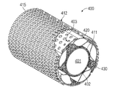 An expandable downhole device may be used for supporting a wellbore and as a flow/sand control device. The expandable downhole device is initially RIH in a compressed state. Once the expandable downhole device reaches a predetermined depth in the wellbore, the expandable downhole device is transitioned from the compressed state to an expanded state to support the wellbore from collapsing. In the expanded state, an activation chamber of the expandable downhole device is expanded from a collapsed state to press an outer shroud of the expandable downhole device against the wellbore. A shape memory foam of the expandable downhole device is also expanded and hardens in the expanded state. The shape memory foam acts as a support layer for the activation chamber to provide additional support for the wellbore. The shape memory foam may be a porous material to be a filter media of the expandable downhole device. An expandable downhole device may be used for supporting a wellbore and as a flow/sand control device. The expandable downhole device is initially RIH in a compressed state. Once the expandable downhole device reaches a predetermined depth in the wellbore, the expandable downhole device is transitioned from the compressed state to an expanded state to support the wellbore from collapsing. In the expanded state, an activation chamber of the expandable downhole device is expanded from a collapsed state to press an outer shroud of the expandable downhole device against the wellbore. A shape memory foam of the expandable downhole device is also expanded and hardens in the expanded state. The shape memory foam acts as a support layer for the activation chamber to provide additional support for the wellbore. The shape memory foam may be a porous material to be a filter media of the expandable downhole device. |
||
| BUOYANT TRIM TAB | ||
| Inventor(s) | Little, B. S. | |
| Sources | US Pat.: 12,747005 | |
| Corporate/Assignee | Ultralight Boatworks, LLC | |
| Publication Date | Sep. 29, 2026 | |
| Abstract: | ||
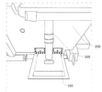 A buoyant trim tab comprising a shell, wherein the shell comprises a top and a bottom, and an insert, wherein the insert comprises a foam section, wherein the foam section comprises a styrene acrylo nitrile foam and further wherein the foam section comprises a low-density subsection and a high-density subsection, and wherein the buoyant trim tab is capable of floating the buoyant trim tab, an actuator, and any components used to mount the buoyant trim tab to a boat. A buoyant trim tab comprising a shell, wherein the shell comprises a top and a bottom, and an insert, wherein the insert comprises a foam section, wherein the foam section comprises a styrene acrylo nitrile foam and further wherein the foam section comprises a low-density subsection and a high-density subsection, and wherein the buoyant trim tab is capable of floating the buoyant trim tab, an actuator, and any components used to mount the buoyant trim tab to a boat. |
||
| HIGH TEMPERATURE RESISTANT, JACKETED FOREIGN MATERIAL EXCLUSION DEVICE | ||
| Inventor(s) | Nolfi, T. J. and Penix, C. | |
| Sources | US Pat.: 12,747,821 | |
| Corporate/Assignee | Advanced F.M.E. Products, Inc. | |
| Publication Date | Sep. 29, 2026 | |
| Abstract: | ||
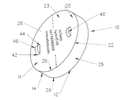 Foreign material exclusion devices that are particularly suited for use in high temperature environments, but can also be used at ambient room temperature or below as well. The devices include a shaped resilient body comprising heat-resistant foam fully encased in a heat resistant jacket. Foreign material exclusion devices that are particularly suited for use in high temperature environments, but can also be used at ambient room temperature or below as well. The devices include a shaped resilient body comprising heat-resistant foam fully encased in a heat resistant jacket. |
||
| MODULAR PUTTING GREEN | ||
| Inventor(s) | Miller, S. E. | |
| Sources | US Pat.: 12,746,448 | |
| Corporate/Assignee | The Innovation Machine | |
| Publication Date | Sep. 29, 2026 | |
| Abstract: | ||
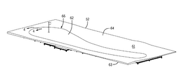 A modular putting green includes a foam pad sculpted for putting a golf ball. A putting green insert is configured to fit within a recessed area of the foam pad. The foam pad may be positioned on a stage having a frame and a platform or on another surface. The foam pad and putting green insert are interchangeable with other foam pads and putting green inserts to change the configuration of the modular putting green for a user. A modular putting green includes a foam pad sculpted for putting a golf ball. A putting green insert is configured to fit within a recessed area of the foam pad. The foam pad may be positioned on a stage having a frame and a platform or on another surface. The foam pad and putting green insert are interchangeable with other foam pads and putting green inserts to change the configuration of the modular putting green for a user. |
||
| FOAM REMOVAL ATTACHMENT | ||
| Inventor(s) | Van Ornum, L. M., Van Ornum, E. M., and Van Ornum, A. F. | |
| Sources | US Pat.: 12,746,555 | |
| Corporate/Assignee | Rock Road Company Sales, LLC | |
| Publication Date | Sep. 29, 2026 | |
| Abstract: | ||
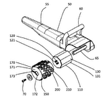 A foam removal attachment has an outer perimeter with projections, each of the projections having a passage passing between a leading face and a trailing face. The attachment is used with a core that is selectively removably secured to a surface conditioning tool or drum tool (such as a grinder) having a rotating shaft. The core rotates under the operation of the tool shaft. The core can have a polygonal outer profile and the attachment can slidingly mate with the core, whereby rotation of the attachment and core occur simultaneously. At least some foam debris can pass around and though the projection during use. The projections can be arranged in a spiral path around the outer wall of the attachment. The attachment can be easily replaced in an economical manner. A foam removal attachment has an outer perimeter with projections, each of the projections having a passage passing between a leading face and a trailing face. The attachment is used with a core that is selectively removably secured to a surface conditioning tool or drum tool (such as a grinder) having a rotating shaft. The core rotates under the operation of the tool shaft. The core can have a polygonal outer profile and the attachment can slidingly mate with the core, whereby rotation of the attachment and core occur simultaneously. At least some foam debris can pass around and though the projection during use. The projections can be arranged in a spiral path around the outer wall of the attachment. The attachment can be easily replaced in an economical manner. |
||
| ROBOTICS DOME CONSTRUCTION SYSTEM AND METHOD | ||
| Inventor(s) | Price, N. | |
| Sources | US Pat.: 12,747,589 | |
| Corporate/Assignee | N/A | |
| Publication Date | Sep. 29, 2026 | |
| Abstract: | ||
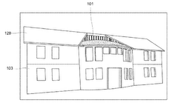 The system allows a user to construct a dome while masking the dome within a structure built with traditional wood building materials. The system may include a membrane material that defines the walls and roof of the dome. The system may also have brackets that are placed into the roof formed by the membrane material. After foam has been sprayed, a user may insert wires into the foam. The wires are positioned so as to receive rebar to add structural stability to the dome. A robotic sprayer applies shotcrete to inner walls of the dome, over the foam, wire, and rebar. A traditional roof may be coupled to the completed concrete dome using the brackets that have been embedded throughout the initial construction of the dome. The system allows a user to construct a dome while masking the dome within a structure built with traditional wood building materials. The system may include a membrane material that defines the walls and roof of the dome. The system may also have brackets that are placed into the roof formed by the membrane material. After foam has been sprayed, a user may insert wires into the foam. The wires are positioned so as to receive rebar to add structural stability to the dome. A robotic sprayer applies shotcrete to inner walls of the dome, over the foam, wire, and rebar. A traditional roof may be coupled to the completed concrete dome using the brackets that have been embedded throughout the initial construction of the dome. |
||
| FOOTWEAR HEEL COUNTER FOR EASIER FOOT ENTRY OR REMOVAL | ||
| Inventor(s) | Weeks, J. M., Kelley, S., Chuang, F., Liao, P-C., Tja, J., Xie, H., and Stockbridge, K. | |
| Sources | US Pat.: 12,745,824 | |
| Corporate/Assignee | Skechers U.S.A. Inc. II | |
| Publication Date | Sep. 29, 2026 | |
| Abstract: | ||
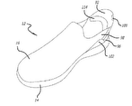 An article of footwear has an upper having an elastic material and a heel cup. The heel cup is constructed of a uniformly molded flexible polymer material and an aperture at a rear, and the elastic material of the upper at the aperture facilitates securement of a user’s foot upon stretching. An upper portion of the heel cup is concave relative to the front portion of the article of footwear and flexes downward and temporarily widens when donning the article of footwear. After foot insertion, the upper portion returns upward to surround a rear portion of a heel of the user’s foot. A foam layer is positioned near a topmost region of the foot-receiving opening and extending into the opening and is compressed by the user’s heel during foot insertion, and to facilitate the securement after donning. An article of footwear has an upper having an elastic material and a heel cup. The heel cup is constructed of a uniformly molded flexible polymer material and an aperture at a rear, and the elastic material of the upper at the aperture facilitates securement of a user’s foot upon stretching. An upper portion of the heel cup is concave relative to the front portion of the article of footwear and flexes downward and temporarily widens when donning the article of footwear. After foot insertion, the upper portion returns upward to surround a rear portion of a heel of the user’s foot. A foam layer is positioned near a topmost region of the foot-receiving opening and extending into the opening and is compressed by the user’s heel during foot insertion, and to facilitate the securement after donning. |
||
| SPORTSWEAR AND BODY-PROTECTING GEARS INCORPORATING SHEAR-THICKENING OR NON-NEWTONIAN FOAMS | ||
| Inventor(s) | Zhu, Y., Han, J., Lee, H. K., Liu, C., Cheung, S. L., and Cheung, M. S. | |
| Sources | US Pat.: 12,740,604 | |
| Corporate/Assignee | Super Rich Moulders Ltd. | |
| Publication Date | Sep. 22, 2026 | |
| Abstract: | ||
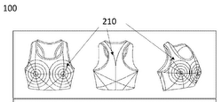 A sports bra exhibits increased resistance in response to increased force. The sports bra includes a front curved region for accommodating a wearer’s breasts, the front curved region including a shear-thickening foam. The shear-thickening foam is relatively flexible up to a first force and is relatively rigid above the first force to retain the wearer’s breasts within the front curved region during vigorous physical activity. A back panel connecting to the front curved region such that the force is at least partially transferred to an upper back or shoulder region of the wearer. A body protecting element protects a body part from an external impact, the body part selected from head, knee, shin, elbow, foot, leg, torso, arm, wrist or hand. The body protecting element includes a housing conforming to the shape of the selected body part. A shear-thickening foam is included in the housing. A sports bra exhibits increased resistance in response to increased force. The sports bra includes a front curved region for accommodating a wearer’s breasts, the front curved region including a shear-thickening foam. The shear-thickening foam is relatively flexible up to a first force and is relatively rigid above the first force to retain the wearer’s breasts within the front curved region during vigorous physical activity. A back panel connecting to the front curved region such that the force is at least partially transferred to an upper back or shoulder region of the wearer. A body protecting element protects a body part from an external impact, the body part selected from head, knee, shin, elbow, foot, leg, torso, arm, wrist or hand. The body protecting element includes a housing conforming to the shape of the selected body part. A shear-thickening foam is included in the housing. |
||
| TONER SEAL MEMBER AND TONER CARTRIDGE | ||
| Inventor(s) | Kiriyama, T. and Uchida, K. | |
| Sources | US Pat.: 12,736,899 | |
| Corporate/Assignee | Inoac Corp. and Rogers Inoac Corp. | |
| Publication Date | Sep. 15, 2026 | |
| Abstract: | ||
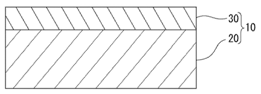 A toner seal member excellent in abrasion resistance. A toner seal member includes a foam layer and a coating layer, and the coating layer is exposed. The coating layer is produced using a polyol, an isocyanate, a photopolymerizable monomer having a hydroxyl group, and a silicone resin as raw materials. A toner seal member excellent in abrasion resistance. A toner seal member includes a foam layer and a coating layer, and the coating layer is exposed. The coating layer is produced using a polyol, an isocyanate, a photopolymerizable monomer having a hydroxyl group, and a silicone resin as raw materials. |
||
| STOCK FOR A FIREARM AND METHOD OF MANUFACTURING A STOCK FOR A FIREARM | ||
| Inventor(s) | Racionero Zabalo, I. and Neira Hernandez, S. J. | |
| Sources | US Pat.: 12,736,303 | |
| Corporate/Assignee | Dikar S. Coop. | |
| Publication Date | Sep. 15, 2026 | |
| Abstract: | ||
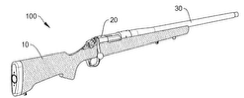 A stock for a firearm. The stock includes a foam core, a carbon fiber skin and a carbon fiber insert having a housing for housing the action mechanisms of the firearm. The carbon fiber insert includes a sheet molding compound (SMC) or a bulk molding compound (BMC) that includes a resin matrix and randomly arranged chopped carbon fibers in the resin matrix. The foam core has a cavity in which the carbon fiber insert is housed. The carbon fiber skin covers the foam core and at least part of the carbon fiber insert housed in its cavity, the carbon fiber insert being mechanically bonded to the carbon fiber skin. A stock for a firearm. The stock includes a foam core, a carbon fiber skin and a carbon fiber insert having a housing for housing the action mechanisms of the firearm. The carbon fiber insert includes a sheet molding compound (SMC) or a bulk molding compound (BMC) that includes a resin matrix and randomly arranged chopped carbon fibers in the resin matrix. The foam core has a cavity in which the carbon fiber insert is housed. The carbon fiber skin covers the foam core and at least part of the carbon fiber insert housed in its cavity, the carbon fiber insert being mechanically bonded to the carbon fiber skin. |
||
| FABRIC-OVER-FOAM (FOF) GASKET FOR COMPUTING STRUCTURE | ||
| Inventor(s) | Chen, C-J. | |
| Sources | US Pat.: 12,740,033 | |
| Corporate/Assignee | Quanta Computer Inc. | |
| Publication Date | Sep. 15, 2026 | |
| Abstract: | ||
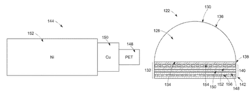 A fabric-over-foam (FOF) gasket assembly includes a foam core having a shaped suited for sealing a gap in a structure of the computing device. The foam core has a base surface and a sealing surface. The FOF gasket assembly further includes an electrically conductive fabric wrapped around the foam core, and a conductive adhesive attached to the base surface. The conductive adhesive includes a release coat layer for attaching the conductive adhesive to the base surface of the foam core, a carrier layer attached to the release coat layer, and a release paper layer removably attached to the carrier layer. The carrier layer includes a polyethylene terephthalate (PET) layer forming a structural base of the threads, an inner layer of a copper material, and an outer layer of a nickel material. A fabric-over-foam (FOF) gasket assembly includes a foam core having a shaped suited for sealing a gap in a structure of the computing device. The foam core has a base surface and a sealing surface. The FOF gasket assembly further includes an electrically conductive fabric wrapped around the foam core, and a conductive adhesive attached to the base surface. The conductive adhesive includes a release coat layer for attaching the conductive adhesive to the base surface of the foam core, a carrier layer attached to the release coat layer, and a release paper layer removably attached to the carrier layer. The carrier layer includes a polyethylene terephthalate (PET) layer forming a structural base of the threads, an inner layer of a copper material, and an outer layer of a nickel material. |
||
| PORTABLE TRAVEL MAT HAVING DIFFERENT CONFIGURATIONS FOR USE AS A PILLOW OR CUSHION FOR COMFORT | ||
| Inventor(s) | Bavli, G. and Bavli Weissman, T. | |
| Sources | US Pat.: 12,727,690 | |
| Corporate/Assignee | N/A | |
| Publication Date | Sep. 8, 2026 | |
| Abstract: | ||
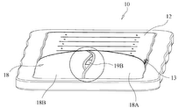 A portable travel mat that includes a pliable foam body having an elongated rectangular shape with a fabric cover. The peripheral edges around four sides of the rectangular-shaped travel mattress include a fabric element attached peripherally to the fabric pad cover and containing two layers of glued together foam, and a firm but bendable cable sandwiched between the two layers of foam, whereby the travel mattress can be manually shaped into multiple configurations by manually bending the bendable cable around the travel mattress into desired shapes, providing a pillow or cushion shape, comfortable for travel, especially on aircraft seats, by a user. A cover pocket affixed to the rear side of the travel mat functions to maintain the travel mat is a rolled up configuration for storage and transport, while further functioning to affix the travel mat to chairs and other apparatus. A portable travel mat that includes a pliable foam body having an elongated rectangular shape with a fabric cover. The peripheral edges around four sides of the rectangular-shaped travel mattress include a fabric element attached peripherally to the fabric pad cover and containing two layers of glued together foam, and a firm but bendable cable sandwiched between the two layers of foam, whereby the travel mattress can be manually shaped into multiple configurations by manually bending the bendable cable around the travel mattress into desired shapes, providing a pillow or cushion shape, comfortable for travel, especially on aircraft seats, by a user. A cover pocket affixed to the rear side of the travel mat functions to maintain the travel mat is a rolled up configuration for storage and transport, while further functioning to affix the travel mat to chairs and other apparatus. |
||
| SUPER-ABSORBENT ADVANCED WOUND DRESSING WITH DRESSING FULL INDICATION | ||
| Inventor(s) | Locke, C. B. | |
| Sources | US Pat.: 12,728,042 | |
| Corporate/Assignee | Solventum Intellectual Properties Company | |
| Publication Date | Sep. 8, 2026 | |
| Abstract: | ||
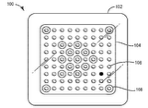 A wound dressing includes a hydrophilic foam layer, a drape layer, superabsorbent projections, and printed indicators. The hydrophilic foam layer is configured to engage a wound bed and has a first side and a second side, the second side configured to face the wound bed. The drape layer has a first side and a second side, the second side configured to face the first side of the hydrophilic foam layer. The plurality of non-contiguous superabsorbent projections are fixed to and extend from the first side of the hydrophilic foam layer towards the second side of the drape layer. The one or more non-contiguous printed indicators surround one or more of the plurality of superabsorbent projections. A wound dressing includes a hydrophilic foam layer, a drape layer, superabsorbent projections, and printed indicators. The hydrophilic foam layer is configured to engage a wound bed and has a first side and a second side, the second side configured to face the wound bed. The drape layer has a first side and a second side, the second side configured to face the first side of the hydrophilic foam layer. The plurality of non-contiguous superabsorbent projections are fixed to and extend from the first side of the hydrophilic foam layer towards the second side of the drape layer. The one or more non-contiguous printed indicators surround one or more of the plurality of superabsorbent projections. |
||
| FUNCTION-ADAPTED THREE-DIMENSIONAL FOAM STRUCTURE | ||
| Inventor(s) | Seitner, R., Aschenbrenner, U., Pieper, M., Sieber, V., and Frank, C. | |
| Sources | US Pat.: 12,728,779 | |
| Corporate/Assignee | DR. Ing. H.C. F. Porsche Aktiengesellschaft | |
| Publication Date | Sep. 8, 2026 | |
| Abstract: | ||
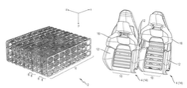 A function-adapted three-dimensional foam structure (2) for a vehicle seat (4) has first foam structure planes (6) to ensure a constant compressive strength of the foam structure (2) in two spatial directions x, y, second foam structure planes (8) to ensure a length variance of the foam structure (2) in a spatial direction z, that is perpendicular to the spatial directions x and y. The first foam structure planes (6) and the second foam structure planes (8) are formed and distributed within the foam structure (2) such that the compressive strength of the foam structure (2) is constant in the spatial directions x, y independent of the length-wise expansion of the foam structure (2) in the spatial direction z. A function-adapted three-dimensional foam structure (2) for a vehicle seat (4) has first foam structure planes (6) to ensure a constant compressive strength of the foam structure (2) in two spatial directions x, y, second foam structure planes (8) to ensure a length variance of the foam structure (2) in a spatial direction z, that is perpendicular to the spatial directions x and y. The first foam structure planes (6) and the second foam structure planes (8) are formed and distributed within the foam structure (2) such that the compressive strength of the foam structure (2) is constant in the spatial directions x, y independent of the length-wise expansion of the foam structure (2) in the spatial direction z. |
||
| PARTIALLY FOAM ENCASED POCKETED SPRING ASSEMBLY | ||
| Inventor(s) | Robertson, S. F., Richmond, D. A., and Jewett, J. V. | |
| Sources | US Pat.: 12,727,679 | |
| Corporate/Assignee | L&P Property Management Company | |
| Publication Date | Sep. 8, 2026 | |
| Abstract: | ||
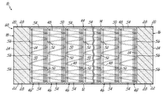 A partially foam encased pocketed spring assembly is made in a fully automated assembly machine. A first foam rail is introduced into the assembly machine and glued to upper and lower substrate webs. A first string of pocketed springs is then glued to a side surface of the first foam rail between upper and lower substrate webs and glued to the upper and lower substrate webs. Additional strings are joined together to create a pocketed spring interior. A second foam rail is then introduced into the assembly machine and glued to an outer string and to the upper and lower substrate webs to create a core. Third and fourth foam rails are glued to the core. A partially foam encased pocketed spring assembly is made in a fully automated assembly machine. A first foam rail is introduced into the assembly machine and glued to upper and lower substrate webs. A first string of pocketed springs is then glued to a side surface of the first foam rail between upper and lower substrate webs and glued to the upper and lower substrate webs. Additional strings are joined together to create a pocketed spring interior. A second foam rail is then introduced into the assembly machine and glued to an outer string and to the upper and lower substrate webs to create a core. Third and fourth foam rails are glued to the core. |
||
| METHODS AND SYSTEMS FOR TANK WALL THERMAL INSULATION | ||
| Inventor(s) | Clark, R. A., Wagner, M. F., Dyakonov, A. A., Ghabchi, A., Grayson, G. D., and Norman, A. K. | |
| Sources | US Pat.: 12,729,815 | |
| Corporate/Assignee | Blue Origin Manufacturing, LLC | |
| Publication Date | Sep. 8, 2026 | |
| Abstract: | ||
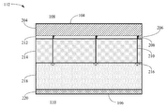 Techniques and materials provide for thermal insulation for tanks, such as tanks for use in space flight missions. Microporous glass blocks may be used as an insulative bridge between spray-on foam insulation and a stainless steel wall of a tank, for example. Blocks of microporous glass may be mechanically attached to the interior of the tank, after which spray-on foam insulation is applied directly to the blocks. The bridging insulation provided by the microporous glass blocks allows the temperature of the stainless steel tank wall to exceed the usable temperature of the spray-on foam insulation by preventing a substantial portion of heat of the stainless steel wall from reaching the spray-on foam insulation. An insulated tank may instead comprise a tank wall that is a sandwich-structured composite layer including an exterior skin, an interior skin, and a core that presents a relatively long thermal path, for improved thermal insulation. Techniques and materials provide for thermal insulation for tanks, such as tanks for use in space flight missions. Microporous glass blocks may be used as an insulative bridge between spray-on foam insulation and a stainless steel wall of a tank, for example. Blocks of microporous glass may be mechanically attached to the interior of the tank, after which spray-on foam insulation is applied directly to the blocks. The bridging insulation provided by the microporous glass blocks allows the temperature of the stainless steel tank wall to exceed the usable temperature of the spray-on foam insulation by preventing a substantial portion of heat of the stainless steel wall from reaching the spray-on foam insulation. An insulated tank may instead comprise a tank wall that is a sandwich-structured composite layer including an exterior skin, an interior skin, and a core that presents a relatively long thermal path, for improved thermal insulation. |
||
| INJECTION MOLDING MACHINE FOR FOAM MOLDING | ||
| Inventor(s) | Naito, A. and Yufu, T. | |
| Sources | US Pat.: 12,722,332 | |
| Corporate/Assignee | The Japan Steel Works, Ltd. | |
| Publication Date | Sep. 1, 2026 | |
| Abstract: | ||
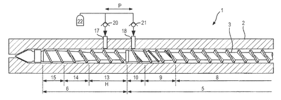 An injection molding machine for foam molding includes: a heating cylinder; a screw disposed in the heating cylinder; and a plurality of inlet portions provided in the heating cylinder and configured to introduce inert gas. An inside of the heating cylinder includes a starvation section on an upstream side in which a pressure of the resin is decreased, and the inert gas from the plurality of inlet portions being to be supplied in the starvation section. Each of the plurality of inlet portions is provided with a check valve or an opening and closing mechanism. A product P×N of an interval P of the plurality of inlet portions and a number N of the inlet portions is 0.5H or more and 1.71H or less with respect to a length H of the starvation section. An injection molding machine for foam molding includes: a heating cylinder; a screw disposed in the heating cylinder; and a plurality of inlet portions provided in the heating cylinder and configured to introduce inert gas. An inside of the heating cylinder includes a starvation section on an upstream side in which a pressure of the resin is decreased, and the inert gas from the plurality of inlet portions being to be supplied in the starvation section. Each of the plurality of inlet portions is provided with a check valve or an opening and closing mechanism. A product P×N of an interval P of the plurality of inlet portions and a number N of the inlet portions is 0.5H or more and 1.71H or less with respect to a length H of the starvation section. |
||
| STACKABLE INTERLOCKING STRUCTURAL FOAM BLOCKS FOR SUPPORTING PATIOS AND OTHER HARDSCAPE BLOCK SYSTEMS | ||
| Inventor(s) | Matys, T. | |
| Sources | US Pat.: 12,723,356 | |
| Corporate/Assignee | Risi Stone Inc. | |
| Publication Date | Sep. 1, 2026 | |
| Abstract: | ||
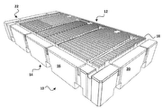 Described herein are various examples of stackable interlocking support blocks formed of rigid foam, for forming single- and multi-course support systems for assembling hardscape raised patios and/or stairs, and stair and patio systems including such support systems. Described herein are various examples of stackable interlocking support blocks formed of rigid foam, for forming single- and multi-course support systems for assembling hardscape raised patios and/or stairs, and stair and patio systems including such support systems. |
||
| SPEAKER BOX AND ELECTRONIC DEVICE | ||
| Inventor(s) | Wang, Z., Wang, H., and Zhang, J. | |
| Sources | US Pat.: 12,726,757 | |
| Corporate/Assignee | AAG Technologies (Nanjing) Co., Ltd. | |
| Publication Date | Sep. 1, 2026 | |
| Abstract: | ||
 A speaker box and an electronic device are provided. The speaker box includes a housing, a speaker unit, and a sound-absorbing foam sheet. The housing includes an accommodating space. The speaker unit is accommodated in the accommodating space. The speaker unit is enclosed with the housing to define a rear cavity. The sound-absorbing foam sheet is adhered to an inner wall of the rear cavity. The sound-absorbing foam sheet includes a foam block and sound-absorbing powders adhered in the foam block. Through the sound-absorbing foam sheet, resonant frequency of the speaker box is effectively reduced, acoustic performance of the speaker box is improved, a structure of the speaker box is stable, and a preparation of the speaker box is simple. A speaker box and an electronic device are provided. The speaker box includes a housing, a speaker unit, and a sound-absorbing foam sheet. The housing includes an accommodating space. The speaker unit is accommodated in the accommodating space. The speaker unit is enclosed with the housing to define a rear cavity. The sound-absorbing foam sheet is adhered to an inner wall of the rear cavity. The sound-absorbing foam sheet includes a foam block and sound-absorbing powders adhered in the foam block. Through the sound-absorbing foam sheet, resonant frequency of the speaker box is effectively reduced, acoustic performance of the speaker box is improved, a structure of the speaker box is stable, and a preparation of the speaker box is simple. |
||
| INSULATION PANEL SEAL | ||
| Inventor(s) | Eget, L. W. | |
| Sources | US Pat.: 12,723,805 | |
| Corporate/Assignee | Hill Phoenix, Inc. | |
| Publication Date | Sep. 1, 2026 | |
| Abstract: | ||
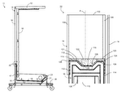 Implementations of the present disclosure include an insulated case that includes a first insulated panel and a second insulated panel. The first insulated panel includes a first foam core sandwiched between a first pair of thermally conductive sheets. The first insulated panel includes a first end face. The second insulated panel includes a second end face that is bonded to the first end face by a thermally insulated joint. The thermally insulated joint includes a continuous layer of cured foam and a continuous layer of non-foam sealant. The continuous layer of cured foam is bonded to both the first end face and the second end face extending along a mated length between the first and second end faces. The continuous layer of non-foam sealant is bonded to both the first end face and the second end face and is adjacent to an outer edge of the layer of cured foam. Implementations of the present disclosure include an insulated case that includes a first insulated panel and a second insulated panel. The first insulated panel includes a first foam core sandwiched between a first pair of thermally conductive sheets. The first insulated panel includes a first end face. The second insulated panel includes a second end face that is bonded to the first end face by a thermally insulated joint. The thermally insulated joint includes a continuous layer of cured foam and a continuous layer of non-foam sealant. The continuous layer of cured foam is bonded to both the first end face and the second end face extending along a mated length between the first and second end faces. The continuous layer of non-foam sealant is bonded to both the first end face and the second end face and is adjacent to an outer edge of the layer of cured foam. |
||
| OUTDOOR BASE LAYER INCLUDING MULTI LAYER JOINT PROTECTION | ||
| Inventor(s) | Zeihmer, T. R. | |
| Sources | US Pat. App.: 20260283269 | |
| Corporate/Assignee | Out West-Livin’ Wild, LLC | |
| Publication Date | Sep. 24, 2026 | |
| Abstract: | ||
 A base layer such as an undershirt or long underwear, for outdoor activities is described. The base layer includes an integrated joint protector. The protector includes foam padding realized as a collection of individual, mutually separated pads having a polygonal perimeter. The thickness of the pads decreases from a centerline of the protector to its medial and lateral edges. The medial and lateral edges have triangular individual pads with vertices facing out, which prevents binding or creasing of the protector under flexure. The base layer includes a rigid over-plate arranged over the foam padding having forward projecting unsupported projections that may deform when subject to shock. A base layer such as an undershirt or long underwear, for outdoor activities is described. The base layer includes an integrated joint protector. The protector includes foam padding realized as a collection of individual, mutually separated pads having a polygonal perimeter. The thickness of the pads decreases from a centerline of the protector to its medial and lateral edges. The medial and lateral edges have triangular individual pads with vertices facing out, which prevents binding or creasing of the protector under flexure. The base layer includes a rigid over-plate arranged over the foam padding having forward projecting unsupported projections that may deform when subject to shock. |
||
| MATTRESSES INCLUDING A COIL LAYER AND AN ELASTOMERIC CUSHIONING ELEMENT | ||
| Inventor(s) | Pearce, T. M., Hamilton, L. C., and Wheadon, T. R. | |
| Sources | US Pat. App.: 20260283374 | |
| Corporate/Assignee | Purple Innovation, LLC | |
| Publication Date | Sep. 24, 2026 | |
| Abstract: | ||
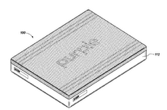 A mattress assembly includes a pocketed coil layer comprising a plurality of coils; a stabilization layer; an elastomeric cushioning element coupled to the stabilization layer, the elastomeric cushioning element comprising an elastomeric material; at least one foam segment adjacent to the elastomeric cushioning element; an upper layer disposed over the coil layer, wherein the at least one foam segment is positioned above the upper layer and the coil layer; and an outer covering encasing the coil layer, the stabilization layer, the upper layer, the elastomeric cushioning element, and the at least one foam segment A mattress assembly includes a pocketed coil layer comprising a plurality of coils; a stabilization layer; an elastomeric cushioning element coupled to the stabilization layer, the elastomeric cushioning element comprising an elastomeric material; at least one foam segment adjacent to the elastomeric cushioning element; an upper layer disposed over the coil layer, wherein the at least one foam segment is positioned above the upper layer and the coil layer; and an outer covering encasing the coil layer, the stabilization layer, the upper layer, the elastomeric cushioning element, and the at least one foam segment |
||
| BATTERY MODULE WITH POLYORGANOSILOXANE FOAM BARRIER | ||
| Inventor(s) | Chang, C-H., Gorin, C. F., Zhu, B., Whitbrodt, M., Tai, X., HU, M., and Yao, X. | |
| Sources | US Pat. App.: 20260290985 | |
| Corporate/Assignee | Dow Silicones Corp. and Dow Global Technologies LLC | |
| Publication Date | Sep. 24, 2026 | |
| Abstract: | ||
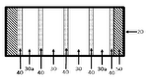 Disclosed is a battery module, comprising an array of spatially separated battery cells and a barrier material contacting adjacent battery cells. The barrier material, which comprises a polyorganosiloxane foam, a fire retardant, and expanded perlite, provides flame-resistance, compressibility and thermal insulation. Disclosed is a battery module, comprising an array of spatially separated battery cells and a barrier material contacting adjacent battery cells. The barrier material, which comprises a polyorganosiloxane foam, a fire retardant, and expanded perlite, provides flame-resistance, compressibility and thermal insulation. |
||
| METHOD AND SYSTEM FOR TREATMENT OF PFAS CONTAMINATED WASTEWATER AND WATER UTILIZING GAS NANOBUBBLES | ||
| Inventor(s) | Polverari, M., Hall, K., and Nie, R. | |
| Sources | US Pat. App.: 20260285708 | |
| Corporate/Assignee | Streamgo Water Solutions Inc. | |
| Publication Date | Sep. 24, 2026 | |
| Abstract: | ||
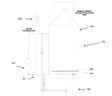 Methods and systems are provided for removing per- and polyfluoroalkyl substances (PFAS) and other contaminants from water using foam fractionation with mixed bubble populations. Water is treated by introducing bubbles comprising nanobubbles and one or more of microbubbles, fine bubbles, or macrobubbles, thereby generating a contaminant-enriched foam that is removed from the water. In certain embodiments, the process is performed in batches, uses ambient air bubbles, applies vacuum to the foam, and/or involves collapsing the foam. The methods may achieve high removal of short-chain PFAS such as PFBS and PFBA, and may include reverse osmosis or nanofiltration pre-concentration and mineralization of removed PFAS by photoactivated reductive defluorination. Also provided are systems including foam fractionation reactors, nanobubble generators, and/or foam collection heads. Methods and systems are provided for removing per- and polyfluoroalkyl substances (PFAS) and other contaminants from water using foam fractionation with mixed bubble populations. Water is treated by introducing bubbles comprising nanobubbles and one or more of microbubbles, fine bubbles, or macrobubbles, thereby generating a contaminant-enriched foam that is removed from the water. In certain embodiments, the process is performed in batches, uses ambient air bubbles, applies vacuum to the foam, and/or involves collapsing the foam. The methods may achieve high removal of short-chain PFAS such as PFBS and PFBA, and may include reverse osmosis or nanofiltration pre-concentration and mineralization of removed PFAS by photoactivated reductive defluorination. Also provided are systems including foam fractionation reactors, nanobubble generators, and/or foam collection heads. |
||
| INFLATABLE GARMENT LINER AND CORRESPONDING GARMENT | ||
| Inventor(s) | Labelle, A., Jourde, B., Rivest, H., Pinard, I., Bellante, T., Bellante, M. A., and Harden, W. | |
| Sources | US Pat. App.: 20260283267 | |
| Corporate/Assignee | 9398-6305 Quebec Inc. | |
| Publication Date | Sep. 24, 2026 | |
| Abstract: | ||
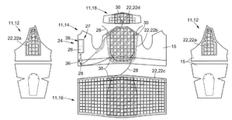 A liner for a garment is provided. The liner includes a main lining layer, an inflatable structure connected to the main lining layer and comprising an inflatable canvas having a plurality of inflatable cells separated by non-inflatable regions. The inflatable cells are adapted to inflate to define a protective layer of the liner and provide protection to the garment. The inflatable structure has first and second layers of molded foam having foam blocks shaped and adapted to engage respective non-inflatable regions on opposite sides of the inflatable canvas. The inflatable structure also has a pair of outer layers coupled to one another and adapted to enclose the inflatable canvas and the first and second layers of molded foam therebetween. A liner for a garment is provided. The liner includes a main lining layer, an inflatable structure connected to the main lining layer and comprising an inflatable canvas having a plurality of inflatable cells separated by non-inflatable regions. The inflatable cells are adapted to inflate to define a protective layer of the liner and provide protection to the garment. The inflatable structure has first and second layers of molded foam having foam blocks shaped and adapted to engage respective non-inflatable regions on opposite sides of the inflatable canvas. The inflatable structure also has a pair of outer layers coupled to one another and adapted to enclose the inflatable canvas and the first and second layers of molded foam therebetween. |
||
| PNEUMATIC MASSAGE INTENSIFICATION FOR A VEHICLE SEAT | ||
| Inventor(s) | Sami, A., Mao, J., and Friesen, J. | |
| Sources | US Pat. App.: 20260274137 | |
| Corporate/Assignee | Leggett & Platt Canada Co. | |
| Publication Date | Sep. 17, 2026 | |
| Abstract: | ||
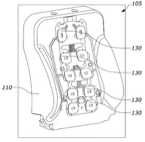 A vehicle seat may include a frame, a back foam, a plurality of adjustable pneumatic bladders positioned within the vehicle seat on an A-surface of the back foam, a source of pressurized air, and a plurality of independently controllable control valves. An electronic processor may be configured to control the plurality of control valves to control the plurality of control valves to provide a wave toggle or a step toggle starting on a first vertical portion of the back foam and moving in a direction up or down to a second vertical portion of the back foam. The electronic processor may be configured to control the plurality of control valves such that the wave toggle or the step toggle continues moving in the direction by controlling the control valves to inflate additional subgroups of bladders located in another vertical portion of the back foam. A vehicle seat may include a frame, a back foam, a plurality of adjustable pneumatic bladders positioned within the vehicle seat on an A-surface of the back foam, a source of pressurized air, and a plurality of independently controllable control valves. An electronic processor may be configured to control the plurality of control valves to control the plurality of control valves to provide a wave toggle or a step toggle starting on a first vertical portion of the back foam and moving in a direction up or down to a second vertical portion of the back foam. The electronic processor may be configured to control the plurality of control valves such that the wave toggle or the step toggle continues moving in the direction by controlling the control valves to inflate additional subgroups of bladders located in another vertical portion of the back foam. |
||
| UPCYCLING POLYURETHANE FOAM BY INCORPORATION OF DYNAMIC COVALENT ADAPTABLE NETWORKS | ||
| Inventor(s) | Wang, X., Lee, E. C-C., Mohammadi, S. R., and Andre, T. | |
| Sources | US Pat. App.: 20260275023 | |
| Corporate/Assignee | Ford Global Technologies, LLC | |
| Publication Date | Sep. 17, 2026 | |
| Abstract: | ||
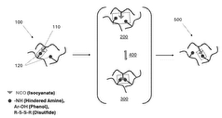 A thermoplastic polyurethane foam has chemical dynamic covalent adaptable networks. The foam comprises a reaction product of a polyol mixture and an isocyanate mixture. The polyol mixture comprises a polyol and a dynamic cross-linking agent with a content between 0.05 to 70 wt. %. The dynamic cross-linking agent forms dynamic cross-linking bonds. A thermoplastic polyurethane foam has chemical dynamic covalent adaptable networks. The foam comprises a reaction product of a polyol mixture and an isocyanate mixture. The polyol mixture comprises a polyol and a dynamic cross-linking agent with a content between 0.05 to 70 wt. %. The dynamic cross-linking agent forms dynamic cross-linking bonds. |
||
| FOAM SPORTS BALL | ||
| Inventor(s) | Cope, S. and Harris, B. | |
| Sources | US Pat. App.: 20260273348 | |
| Corporate/Assignee | Implus Footcare, LLC | |
| Publication Date | Sep. 17, 2026 | |
| Abstract: | ||
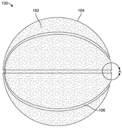 A foam basketball having a size and weight comparable to a traditional inflated regulation basketball. The foam basketball is formed from a dense polymeric foam, such as polyurethane. In some embodiments, the foam has a density of between 80 and 90 kg/m.sup.3. The foam basketball may have a weight between about 350 grams and about 650 grams, inclusive, and a circumference between about 20 inches and about 30 inches, inclusive. A foam basketball having a size and weight comparable to a traditional inflated regulation basketball. The foam basketball is formed from a dense polymeric foam, such as polyurethane. In some embodiments, the foam has a density of between 80 and 90 kg/m.sup.3. The foam basketball may have a weight between about 350 grams and about 650 grams, inclusive, and a circumference between about 20 inches and about 30 inches, inclusive. |
||
| METHOD AND DEVICE FOR PRODUCING A FIBROUS WEB | ||
| Inventor(s) | Boehm, A. and Pesch, A. | |
| Sources | US Pat. App.: 20260275634 | |
| Corporate/Assignee | Andritz Kuesters GmbH | |
| Publication Date | Sep. 17, 2026 | |
| Abstract: | ||
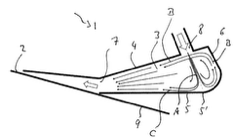 A device for manufacturing a fibrous web. The device includes a turbulence chamber having an inlet which introduces a fiber foam into the turbulence chamber, and an outlet side for discharging the fiber foam from the turbulence chamber. The turbulence chamber generates a shear rate of at least 10 sec−1 throughout the turbulence chamber. A device for manufacturing a fibrous web. The device includes a turbulence chamber having an inlet which introduces a fiber foam into the turbulence chamber, and an outlet side for discharging the fiber foam from the turbulence chamber. The turbulence chamber generates a shear rate of at least 10 sec−1 throughout the turbulence chamber. |
||
| LAUNDRY DETERGENT ARTICLE | ||
| Inventor(s) | Kim, J. W., Boyke, C., and Ganopolsky, I. | |
| Sources | US Pat. App.: 20260275252 | |
| Corporate/Assignee | Church & Dwight Co., Inc. | |
| Publication Date | Sep. 17, 2026 | |
| Abstract: | ||
| The present disclosure provides cleaning articles. The articles can be formed of a detergent composition and a film former, and a foam stabilizer. The detergent composition can comprise at least one surfactant. The cleaning article can be configured as a substantially solid foam structure that is soluble in aqueous liquid and substantially non-flowing at a temperature of about 80° C. or less when out of contact with the aqueous liquid. The surfactant can include a relatively high concentration of non-ionic surfactants that do not lessen the integrity of the cleaning article. The surfactants can particularly comprise C.sub.16 or greater non-ionic surfactants, such as C.sub.16 or greater alcohol ethoxylates. | ||
| SYSTEMS, COMPONENTS, AND METHODS FOR LOW PRESSURE DELIVERY OF PLURAL COMPONENT SYSTEMS SUCH AS POLYURETHANE FOAMS FROM UNPRESSURIZED SUPPLY SOURCES | ||
| Inventor(s) | Peters, T. J., Peterson, J. F., and Faulkner, D. H. | |
| Sources | US Pat. App.: 20260273553 | |
| Corporate/Assignee | Spray Foam Systems, LLC | |
| Publication Date | Sep. 17, 2026 | |
| Abstract: | ||
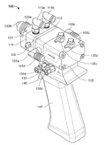 Various examples are provided related to low pressure delivery, e.g., less than 250 psi at the point of application, of plural component system from unpressurized parts A and B material supplies. In one example, a system includes a polyurethane spray foam (“SPF”) raw material supply including parts A and B and a fluid handling system that can deliver the SPF raw material at low pressure to a metal spray gun in metered amounts through separate material fluid paths/conduits via a heated hose length and a whip hose. The fluid handling system can also deliver air at low pressure to the spray gun through separate air stream paths so that the air is communicated to the part A and B material conduits forward of the part A and B material input locations, where they are supplied separately to a mixing nozzle that is engaged at an end of the spray gun. Various examples are provided related to low pressure delivery, e.g., less than 250 psi at the point of application, of plural component system from unpressurized parts A and B material supplies. In one example, a system includes a polyurethane spray foam (“SPF”) raw material supply including parts A and B and a fluid handling system that can deliver the SPF raw material at low pressure to a metal spray gun in metered amounts through separate material fluid paths/conduits via a heated hose length and a whip hose. The fluid handling system can also deliver air at low pressure to the spray gun through separate air stream paths so that the air is communicated to the part A and B material conduits forward of the part A and B material input locations, where they are supplied separately to a mixing nozzle that is engaged at an end of the spray gun. |
||
| CONTINUOUS INSULATION SHEATHING WITH DRAINAGE EMBOSSMENT | ||
| Inventor(s) | Savoy, T. L. and Chopra, D. | |
| Sources | US Pat. App.: 20260275712 | |
| Corporate/Assignee | Henry Co., LLC | |
| Publication Date | Sep. 17, 2026 | |
| Abstract: | ||
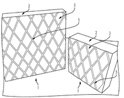 The invention relates generally to insulation sheathing in interior or exterior wall constructions for residential and business applications. More specifically, the invention pertains to an improved moisture drainage system that prevents waterproofing failure, mold, mildew, and wood rot, associated with conventional wall constructions. Particularly, this invention relates to insulation sheathing combined with a weather-resistive barrier that allows for drainage of moisture in wall construction applications. The product of the present invention comprises an embossed drainage plane on one or both sides of an insulation product, but particularly on the facer side of the lamination. The product may be used as continuous or non-continuous insulation sheathing. This invention also relates to a first insulation sheathing panel, comprising: (iii) an insulation foam layer having an outer surface and an inner surface, and (iv) a first insulation facer having an outer surface and an inner surface, wherein the inner surface of the first insulation facer is adhered to the inner surface of the insulation foam layer; wherein the first insulation facer exceeds the dimension of the insulation foam layer at least at one edge to create an extension flap of the insulation facer, wherein the extension flap further comprises a removably attached release liner attached to the insulation facer’s inner surface. This invention also relates to an insulation sheathing system comprising two insulation sheathing panels: a first insulation sheathing panel and a second insulation sheathing panel, wherein the panels are juxtaposed side by side in one plane, wherein each panel comprises either a groove or a tongue at least on one side of the panel. The invention relates generally to insulation sheathing in interior or exterior wall constructions for residential and business applications. More specifically, the invention pertains to an improved moisture drainage system that prevents waterproofing failure, mold, mildew, and wood rot, associated with conventional wall constructions. Particularly, this invention relates to insulation sheathing combined with a weather-resistive barrier that allows for drainage of moisture in wall construction applications. The product of the present invention comprises an embossed drainage plane on one or both sides of an insulation product, but particularly on the facer side of the lamination. The product may be used as continuous or non-continuous insulation sheathing. This invention also relates to a first insulation sheathing panel, comprising: (iii) an insulation foam layer having an outer surface and an inner surface, and (iv) a first insulation facer having an outer surface and an inner surface, wherein the inner surface of the first insulation facer is adhered to the inner surface of the insulation foam layer; wherein the first insulation facer exceeds the dimension of the insulation foam layer at least at one edge to create an extension flap of the insulation facer, wherein the extension flap further comprises a removably attached release liner attached to the insulation facer’s inner surface. This invention also relates to an insulation sheathing system comprising two insulation sheathing panels: a first insulation sheathing panel and a second insulation sheathing panel, wherein the panels are juxtaposed side by side in one plane, wherein each panel comprises either a groove or a tongue at least on one side of the panel. |
||
| FOAM-FRAMED MODULAR EYEGLASSES | ||
| Inventor(s) | Soldner, S. A. | |
| Sources | US Pat. App.: 20260267160 | |
| Corporate/Assignee | N/A | |
| Publication Date | Sep. 10, 2026 | |
| Abstract: | ||
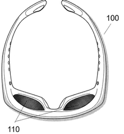 A modular floating pair of eyeglasses is disclosed, wherein the frame comprises a single piece of flexible foam material where interchangeable lenses can snap in. In an embodiment, the frame may also comprise decoration mounting holes where decorative elements can snap in. A modular floating pair of eyeglasses is disclosed, wherein the frame comprises a single piece of flexible foam material where interchangeable lenses can snap in. In an embodiment, the frame may also comprise decoration mounting holes where decorative elements can snap in. |
||
| DRYING TOOL | ||
| Inventor(s) | Van Tongerloo, A. A. | |
| Sources | US Pat. App.: 20260262903 | |
| Corporate/Assignee | Broken Lantern Inc. | |
| Publication Date | Sep. 10, 2026 | |
| Abstract: | ||
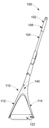 A drying tool for marine, automotive, and other applications includes a buoyant, lightweight handle and a polyvinyl alcohol (PVA) foam roller for absorbing moisture from surfaces. The PVA foam roller is mounted on a roller shaft and is secured to the handle using a quick-release mechanism, enabling easy attachment and replacement. An integrated wringing mechanism removes excess moisture from the PVA foam roller. The handle may detachably connect to an extension pole for larger surfaces and extended-reach applications. A drying tool for marine, automotive, and other applications includes a buoyant, lightweight handle and a polyvinyl alcohol (PVA) foam roller for absorbing moisture from surfaces. The PVA foam roller is mounted on a roller shaft and is secured to the handle using a quick-release mechanism, enabling easy attachment and replacement. An integrated wringing mechanism removes excess moisture from the PVA foam roller. The handle may detachably connect to an extension pole for larger surfaces and extended-reach applications. |
||
| CHARGING-MEMBER CLEANER, IMAGE FORMING APPARATUS, AND PROCESS CARTRIDGE | ||
| Inventor(s) | Nakai, H. | |
| Sources | US Pat. App.: 20260267252 | |
| Corporate/Assignee | N/A | |
| Publication Date | Sep. 10, 2026 | |
| Abstract: | ||
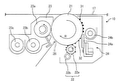 A charging-member cleaner includes a roller member to abut on a charging member of a roller shape to clean the charging member. The roller member includes a foam. The foam has an airflow volume of 90 L/min or more and 200 L/min or less. A charging-member cleaner includes a roller member to abut on a charging member of a roller shape to clean the charging member. The roller member includes a foam. The foam has an airflow volume of 90 L/min or more and 200 L/min or less. |
||
| SEAT PAD | ||
| Inventor(s) | Imai, K., Kondo, S., and Mikuni, T. | |
| Sources | US Pat. App.: 20260265442 | |
| Corporate/Assignee | Inoac Corp. | |
| Publication Date | Sep. 10, 2026 | |
| Abstract: | ||
 A seat pad includes a polyurethane foam, and the polyurethane foam has a deflection coefficient of 2.8 or less, and a displacement rate (=t.sub.1×100/t.sub.0) of 30% or more: where t.sub.0 is a thickness of a flat plate sample cut out from the polyurethane foam, and t.sub.1 is a maximum value of a displacement amount (sinking amount) of an iron plate when a damping characteristic is measured in accordance with JASO B408 using the flat plate sample. In the seat pad, the displacement rate when t.sub.0=50 mm is preferably 45% or more. A seat pad includes a polyurethane foam, and the polyurethane foam has a deflection coefficient of 2.8 or less, and a displacement rate (=t.sub.1×100/t.sub.0) of 30% or more: where t.sub.0 is a thickness of a flat plate sample cut out from the polyurethane foam, and t.sub.1 is a maximum value of a displacement amount (sinking amount) of an iron plate when a damping characteristic is measured in accordance with JASO B408 using the flat plate sample. In the seat pad, the displacement rate when t.sub.0=50 mm is preferably 45% or more. |
||
| COMPOSITE THIN WINGBOX ARCHITECTURE FOR SUPERSONIC BUSINESS JETS | ||
| Inventor(s) | Behzadpour, F. and Stickler, P. B. | |
| Sources | US Pat. App.: 20260257784 | |
| Corporate/Assignee | The Boeing Co. | |
| Publication Date | Sep. 3, 2026 | |
| Abstract: | ||
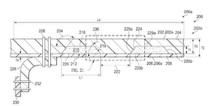 An aircraft apparatus comprising two spars and a panel. The two spars separated by a distance. The panel comprising an outer face sheet, an inner face sheet, a plurality of foam pieces, and a plurality of planks. The panel connected to the two spars and extending the distance between the two spars. The outer face sheet forming an outer exterior surface of the panel and the outer face sheet comprising a plurality of first composite materials. The inner face sheet forming an inner exterior surface of the panel and the inner face sheet comprising a plurality of second composite materials. The plurality of foam pieces disposed between the outer face sheet and the inner face sheet, and the plurality of foam pieces are disposed in the distance between the two spars. The plurality of planks arranged between the plurality of foam pieces. An aircraft apparatus comprising two spars and a panel. The two spars separated by a distance. The panel comprising an outer face sheet, an inner face sheet, a plurality of foam pieces, and a plurality of planks. The panel connected to the two spars and extending the distance between the two spars. The outer face sheet forming an outer exterior surface of the panel and the outer face sheet comprising a plurality of first composite materials. The inner face sheet forming an inner exterior surface of the panel and the inner face sheet comprising a plurality of second composite materials. The plurality of foam pieces disposed between the outer face sheet and the inner face sheet, and the plurality of foam pieces are disposed in the distance between the two spars. The plurality of planks arranged between the plurality of foam pieces. |
||
| ELECTRONIC DEVICE WITH IMPROVED CIRCUIT BOARD HOLDING SYSTEM | ||
| Inventor(s) | Roth, J., Anhalt, T. J., Sanandajifar, J. deGoede, G., and Torres, M. A. | |
| Sources | US Pat. App.: 20260262186 | |
| Corporate/Assignee | Karl Storz Imaging, Inc. | |
| Publication Date | Sep. 3, 2026 | |
| Abstract: | ||
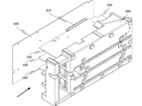 The present disclosure is generally related to a device for holding a Printed Circuit Board (PCB) or similar electrical component. Some electrical devices benefit from having foam inside an outer metal enclosure to hold the various components. The foam can assist with one or more of airflow, device mounting, noise dampening and shock absorption. However, one challenge that exists, especially for high frequency electronic devices, is that the foam being in contact with the PCB can potentially cause electrical interference issues. As such, an exemplary embodiment is directed to an improved PCB securing structure. One exemplary aspect is directed to a PCB clip and support block that secure a PCB to and electrically isolate the PCB from the support block. Another exemplary aspect is directed to a monolithic PCB clip that secures a PCB to mounting foam within an enclosure and electrically isolates the PCB from the mounting foam. The present disclosure is generally related to a device for holding a Printed Circuit Board (PCB) or similar electrical component. Some electrical devices benefit from having foam inside an outer metal enclosure to hold the various components. The foam can assist with one or more of airflow, device mounting, noise dampening and shock absorption. However, one challenge that exists, especially for high frequency electronic devices, is that the foam being in contact with the PCB can potentially cause electrical interference issues. As such, an exemplary embodiment is directed to an improved PCB securing structure. One exemplary aspect is directed to a PCB clip and support block that secure a PCB to and electrically isolate the PCB from the support block. Another exemplary aspect is directed to a monolithic PCB clip that secures a PCB to mounting foam within an enclosure and electrically isolates the PCB from the mounting foam. |
||
| ABSORBENT POLYMER MATERIAL, FILLER AND CLADDING COMPRISING SAME | ||
| Inventor(s) | Rodriguez Calvete, J., Calvo Robledo, J., Aberturas Lopez, S., Gortina Blanco, D., and Hernando Grande, A. | |
| Sources | EP-A1-004803567 | |
| Corporate/Assignee | Micromag 2000, S. L. | |
| Publication Date | Sep. 9, 2026 | |
| Abstract: | ||
| An absorbent polymeric material comprising a polymeric foam and inclusions of carbon fibre filaments configured to absorb electromagnetic radiation, and filler and coating comprising the same. | ||
| METHOD FOR MANUFACTURING A FOOTWEAR PART, MANUFACTURING SYSTEM, AND ARTICLE OF FOOTWEAR | ||
| Inventor(s) | Ortiz, E. M., Pak, J-H., and Kweon, N. | |
| Sources | WO-A1-2026180625 | |
| Corporate/Assignee | On Clouds GmbH | |
| Publication Date | Sep. 3, 2026 | |
| Abstract: | ||
| The invention pertains to a method for manufacturing a footwear part (14) having a footwear element (16), comprising a provisioning step (20) of providing a foamed footwear element precursor (30) and a sealing step (24) of sealing at least one surface area (32) of the foamed footwear element precursor (30) by energy deposition, thereby at least partially forming the footwear element (16). The invention further pertains to a manufacturing system (28) for manufacturing a footwear part (14) having a footwear element (16), comprising an energy depositing unit (34) for energy deposition onto a foamed footwear element precursor (30) to seal at least one surface area (32) of the foamed footwear element precursor (30) for at least partially forming the footwear element (16), and to an article of footwear (12) comprising or being at least partially derived from a footwear part (14). | ||
e. Environmental
| BIO-BASED CARBON FOAM | ||
| Inventor(s) | Masson, D., Walter, S., Koklukaya, O., and Hult Torron, D. | |
| Sources | US Pat.: 12,722,976 | |
| Corporate/Assignee | Stora Enso OYJ | |
| Publication Date | Sep. 1, 2026 | |
| Abstract: | ||
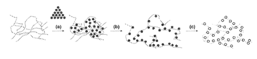 The present invention relates to bio-based carbon foams, a method for their manufacturing and their use. The method comprises foaming a slurry of cellulose fibres and a biomass component to obtain a biomass-cellulose fibre foam, and carbonization of said biomass-cellulose fibre foam. The present invention relates to bio-based carbon foams, a method for their manufacturing and their use. The method comprises foaming a slurry of cellulose fibres and a biomass component to obtain a biomass-cellulose fibre foam, and carbonization of said biomass-cellulose fibre foam. |
||
| PROCESS FOR PRODUCING A HYBRID NON-ISOCYANATE-CONTAINING POLYURETHANE | ||
| Inventor(s) | Lutz, V. and Odermatt-Baer, D. | |
| Sources | US Pat. App.: 20260286051 | |
| Corporate/Assignee | nolax AG | |
| Publication Date | Sep. 24, 2026 | |
| Abstract: | ||
| The present invention relates to methods for producing a hybrid non-isocyanate polyurethane. Apart from this, it relates to kits of parts for producing a hybrid non-isocyanate polyurethane. Furthermore, it relates to hybrid non-isocyanate polyurethanes obtainable by one of the methods according to the invention. It also relates to the use of hybrid non-isocyanate polyurethanes for the production of a foam, a binder, an adhesive or a coating. | ||
| STABILIZERS FOR POLYMER FOAMS BASED ON RECYCLING OF POLYDIMETHYLSILOXANE | ||
| Inventor(s) | Rosen, T., Ferenz, M., Lobert, M., and Schiller, C. | |
| Sources | US Pat. App.: 20260286061 | |
| Corporate/Assignee | Evonik Operations GmbH | |
| Publication Date | Sep. 24, 2026 | |
| Abstract: | ||
| Polyether polydimethylsiloxanes can be used as stabilizers for polymer foams, such as polyurethane foams. Polyether polydimethylsiloxanes can be manufactured based on compounds from recycling processes. A process produces polyether polydimethylsiloxanes based on a recycled linear polydimethylsiloxane. A process and a composition are used for preparing a polymeric foam making use of the polyether polydimethylsiloxane, as well as articles produced thereof. A recycled-polydimethylsiloxane-containing composition and the polyether polydimethylsiloxanes for use as foam stabilizers are disclosed. | ||
| SUPPORTED POLY(ALLYL)AMINE AND DERIVATIVES FOR CO2 CAPTURE FROM FLUE GAS OR ULTRA-DILUTE GAS STREAMS SUCH AS AMBIENT AIR OR ADMIXTURES THEREOF | ||
| Inventor(s) | Khunsupat, R., Jones, C. W., and Bali, S. | |
| Sources | US Pat. App.: 20260284637 | |
| Corporate/Assignee | Georgia Tech Research Corp. | |
| Publication Date | Sep. 24, 2026 | |
| Abstract: | ||
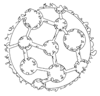 Supported amine polymer adsorbents based on polymers containing only or primarily primary amines sites are to be used as regenerable adsorbents for CO.sub.2 capture from ultra-dilute gas streams, such as ambient air, or from mixtures of gases containing preferably at least I 0% oxygen. and can also be useful for use at the moderate gas pressures found in typical post-combustion capture processes, such as flue gas from large point sources such as coal-fired power plants. Preferred supported solid amine adsorbents of this invention are based on poly(allylamine) (“PAA”) and poly(vinyl amine) (“PVAm”), both of which are linear polymers, and their derivatives, containing substantially all primary amine groups, supported on substrates. Preferred such substrates include silica mesocellular foam (MCF) and mesoporous-.gamma.-alumina, as well on mesoporous-.gamma.-alumina coated throughout the pores of MCF, most preferably of monolithic structure. Preferred derivatives include the guanidinylated and cross-linked poly(allylamine) materials. Supported amine polymer adsorbents based on polymers containing only or primarily primary amines sites are to be used as regenerable adsorbents for CO.sub.2 capture from ultra-dilute gas streams, such as ambient air, or from mixtures of gases containing preferably at least I 0% oxygen. and can also be useful for use at the moderate gas pressures found in typical post-combustion capture processes, such as flue gas from large point sources such as coal-fired power plants. Preferred supported solid amine adsorbents of this invention are based on poly(allylamine) (“PAA”) and poly(vinyl amine) (“PVAm”), both of which are linear polymers, and their derivatives, containing substantially all primary amine groups, supported on substrates. Preferred such substrates include silica mesocellular foam (MCF) and mesoporous-.gamma.-alumina, as well on mesoporous-.gamma.-alumina coated throughout the pores of MCF, most preferably of monolithic structure. Preferred derivatives include the guanidinylated and cross-linked poly(allylamine) materials. |
||
| RECYCLED POLYURETHANE FOAM COMPOSITION FOR AUTOMOTIVE INTERIOR MATERIALS AND POLYURETHANE FOAM MADE THEREFROM | ||
| Inventor(s) | Seo, W. J., Lee, S. H., and Choi, J. H. | |
| Sources | US Pat. App.: 20260273810 | |
| Corporate/Assignee | Hyundai Motor Co., Kia Corp., and Foam Works Co., Ltd. | |
| Publication Date | Sep. 17, 2026 | |
| Abstract: | ||
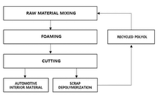 The present disclosure relates to a recycled polyurethane foam composition for automotive interior materials and polyurethane foam made therefrom. The recycled polyurethane foam composition and polyurethane foam reduces carbon emissions by establishing a waste resource circulation system through recycling waste polyurethane foam, and exhibits physical properties equivalent to those of virgin polyurethane foam, making it commercially viable. The present disclosure relates to a recycled polyurethane foam composition for automotive interior materials and polyurethane foam made therefrom. The recycled polyurethane foam composition and polyurethane foam reduces carbon emissions by establishing a waste resource circulation system through recycling waste polyurethane foam, and exhibits physical properties equivalent to those of virgin polyurethane foam, making it commercially viable. |
||
| HYDROPHOBIC LIGNIN-BASED IN-BUILT FIRE RETARDANT, ITS PREPARATION AND APPLICATION IN POLYURETHANE FOAM | ||
| Inventor(s) | Bao, S. P., Xing, X., and Gao, L. | |
| Sources | US Pat. App.: 20260275197 | |
| Corporate/Assignee | Nano and Advanced Materials Institute Ltd. | |
| Publication Date | Sep. 17, 2026 | |
| Abstract: | ||
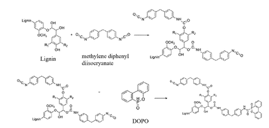 The present invention provides a simple fabrication process with (no acid, no solvent, halogen-free) environmental-friendly steps to produce a lignin-based fire retardant (LFR) material with in-built fire-retardant functional groups for polyurethane (PU) foam. It also involves the chemical reaction for activating lignin by grafting nonhalogenated phosphate groups of traditional fire retardant with reactive functional groups and changing the original hydrophilic property of traditional fire retardant to hydrophobic property of the novel LFR. A bio-based PU foam with inbuilt fire retardancy is designed by the application of the LFR. The good fire retardancy of the developed PU foam can be achieved without affecting density or compromising thermal conductivity. The present invention provides a simple fabrication process with (no acid, no solvent, halogen-free) environmental-friendly steps to produce a lignin-based fire retardant (LFR) material with in-built fire-retardant functional groups for polyurethane (PU) foam. It also involves the chemical reaction for activating lignin by grafting nonhalogenated phosphate groups of traditional fire retardant with reactive functional groups and changing the original hydrophilic property of traditional fire retardant to hydrophobic property of the novel LFR. A bio-based PU foam with inbuilt fire retardancy is designed by the application of the LFR. The good fire retardancy of the developed PU foam can be achieved without affecting density or compromising thermal conductivity. |
||
| RESILIENT BACTERIAL NANOCELLULOSE FOAM | ||
| Inventor(s) | O, W. N. W., Chen, X., Cheng, D., and Yan, G. | |
| Sources | US Pat. App.: 20260275086 | |
| Corporate/Assignee | Nano and Advanced Materials Institute Ltd. | |
| Publication Date | Sep. 17, 2026 | |
| Abstract: | ||
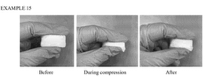 A resilient bacterial nanocellulose foam having at least 80 percent biobased carbon content having 0.7% to 1.5% w/w biopolymer of TEMPO-oxidized bacterial nanocellulose or mixtures of TEMPO-oxidized bacterial nanocellulose and an anionic biopolymer The material includes 0.1% to 2% w/w surfactant and 0.3% to 1.5% w/w crosslinker. The crosslinker may be a divalent metal ion donor such as a metal salt (e.g., calcium salt or a zinc salt, for example, calcium carbonate or zinc carbonate or mixtures). A void-forming agent of 0.3% to 0.9% w/w and 4% to 10% w/w of a resilience-enhancing modifier are added to provide mechanical properties similar to those of commercial polyurethane foams. The resilient bacterial nanocellulose foam has a density of 30 to 182 kg/m.sup.3, a tensile strength of 98 to 1195 kPa, and a resilience of 18 to 39%. The TEMPO-oxidized bacterial nanocellulose has a degree of polymerization (DP) of at least 700. A resilient bacterial nanocellulose foam having at least 80 percent biobased carbon content having 0.7% to 1.5% w/w biopolymer of TEMPO-oxidized bacterial nanocellulose or mixtures of TEMPO-oxidized bacterial nanocellulose and an anionic biopolymer The material includes 0.1% to 2% w/w surfactant and 0.3% to 1.5% w/w crosslinker. The crosslinker may be a divalent metal ion donor such as a metal salt (e.g., calcium salt or a zinc salt, for example, calcium carbonate or zinc carbonate or mixtures). A void-forming agent of 0.3% to 0.9% w/w and 4% to 10% w/w of a resilience-enhancing modifier are added to provide mechanical properties similar to those of commercial polyurethane foams. The resilient bacterial nanocellulose foam has a density of 30 to 182 kg/m.sup.3, a tensile strength of 98 to 1195 kPa, and a resilience of 18 to 39%. The TEMPO-oxidized bacterial nanocellulose has a degree of polymerization (DP) of at least 700. |
||
| DESTRUCTION OF PERFLUORO- OR POLYFLUORO-ALKYL SUBSTANCES | ||
| Inventor(s) | Borras, C., Brito, J., Luke, D. A., and Broaddrick, K. | |
| Sources | US Pat. App.: 20260257978 | |
| Corporate/Assignee | N/A | |
| Publication Date | Sep. 3, 2026 | |
| Abstract: | ||
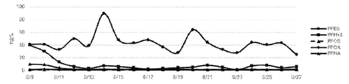 A method of destroying one or more perfluoro- or polyfluoro-alkyl substances (PFAS) includes performing a destruction procedure on an aqueous composition to form a treated aqueous composition. The aqueous composition includes the one or more PFAS. The treated aqueous composition has a concentration of the one or more PFAS that is lower than a concentration of the one or more PFAS in the aqueous composition. The method includes aerating the treated aqueous composition to form a foam thereon. The method also includes separating the foam from the treated aqueous composition to form a concentrate and a clarified aqueous composition. The clarified aqueous composition has a concentration of the one or more PFAS that is lower than a concentration of the one or more PFAS in the concentrate. A method of destroying one or more perfluoro- or polyfluoro-alkyl substances (PFAS) includes performing a destruction procedure on an aqueous composition to form a treated aqueous composition. The aqueous composition includes the one or more PFAS. The treated aqueous composition has a concentration of the one or more PFAS that is lower than a concentration of the one or more PFAS in the aqueous composition. The method includes aerating the treated aqueous composition to form a foam thereon. The method also includes separating the foam from the treated aqueous composition to form a concentrate and a clarified aqueous composition. The clarified aqueous composition has a concentration of the one or more PFAS that is lower than a concentration of the one or more PFAS in the concentrate. |
||
| POLYURETHANE FOAM DECOMPOSITION DEVICE AND POLYURETHANE FOAM DECOMPOSITION METHOD | ||
| Inventor(s) | Hara, T. | |
| Sources | US Pat. App.: 20260258219 | |
| Corporate/Assignee | Inoac Corp. | |
| Publication Date | Sep. 3, 2026 | |
| Abstract: | ||
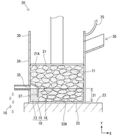 A decomposition device (20) for decomposing a polyurethane foam (11) includes a container (30) for containing the polyurethane foam (11) and a decomposer (13), a pressing part (21) for pressing the polyurethane foam (11) in the container (30), and a heating part (23) for heating an inside of the container (30). The container (30) includes a retaining part (31) for retaining a liquid material (10) containing a decomposed material of the polyurethane foam (11) and the decomposer (13). The pressing part (21) is configured to press the polyurethane foam (11) downward to push the polyurethane foam (11) into the liquid material (10) in the retaining part (31). A decomposition device (20) for decomposing a polyurethane foam (11) includes a container (30) for containing the polyurethane foam (11) and a decomposer (13), a pressing part (21) for pressing the polyurethane foam (11) in the container (30), and a heating part (23) for heating an inside of the container (30). The container (30) includes a retaining part (31) for retaining a liquid material (10) containing a decomposed material of the polyurethane foam (11) and the decomposer (13). The pressing part (21) is configured to press the polyurethane foam (11) downward to push the polyurethane foam (11) into the liquid material (10) in the retaining part (31). |
||
| FORMING MANDREL AND LIQUID RECOVERY METHODS FOR USE IN SHEET PRODUCTION PROCESS | ||
| Inventor(s) | Cradic, M. W., Donelson, M. E., Perri, S. T., Shankar, R., and Compton, D. W. | |
| Sources | US Pat. App.: 20260257409 | |
| Corporate/Assignee | Eastman Chem. Co. | |
| Publication Date | Sep. 3, 2026 | |
| Abstract: | ||
 Mandrels for use in foam sheet production processes. The mandrels may include features for controlling the surface temperature of the mandrels and/or for collecting liquid condensate formed during the foam sheet production processes. The mandrels may be used in conjunction with systems and methods for recovering, and optionally recycling, the liquid condensate. The mandrels, systems, and methods are particularly useful for recovering plasticizer components in the production of cellulose ester foam sheets and articles. Mandrels for use in foam sheet production processes. The mandrels may include features for controlling the surface temperature of the mandrels and/or for collecting liquid condensate formed during the foam sheet production processes. The mandrels may be used in conjunction with systems and methods for recovering, and optionally recycling, the liquid condensate. The mandrels, systems, and methods are particularly useful for recovering plasticizer components in the production of cellulose ester foam sheets and articles. |
||
| METHOD FOR MANUFACTURING MULTI-PLY PAPERBOARD | ||
| Inventor(s) | Land Hensdal, C. | |
| Sources | WO-A1-2026185640 | |
| Corporate/Assignee | Stora Enso OYJ | |
| Publication Date | Sep. 10, 2026 | |
| Abstract: | ||
| A method for manufacturing multi-ply paperboard comprising a bulk ply sandwiched between a top ply and a back ply in a paperboard machine, the method comprising the steps of: a) applying a pulp suspension comprising at least 50 wt% of bleached or unbleached kraft pulp onto a moving wire to form a wet back web, and partially dewatering the wet back web on the wire to obtain a partially dewatered back web; b) applying a foamed pulp suspension comprising at least 50 wt% of softwood or hardwood CTMP or HT-CTMP onto a moving wire to form a wet bulk web, and partially dewatering the wet bulk web on the wire to obtain a partially dewatered bulk web; c) applying a pulp suspension comprising at least 50 wt% of bleached or unbleached kraft pulp, and 1-15 wt% of mineral filler, onto a moving wire to form a wet top web, and partially dewatering the wet top web on the wire to obtain a partially dewatered top web. | ||
f. Thermoset Foam; PU and Others
| POLYOL PREMIXES, THERMALLY INSULATING RIGID POLYURETHANE FOAMS AND METHODS FOR THEIR PRODUCTION | ||
| Inventor(s) | Parks, B. W., Adkins, R. L., and Mosco, L. A. | |
| Sources | US Pat.: 12,742,034 | |
| Corporate/Assignee | Covestro LLC | |
| Publication Date | Sep. 22, 2026 | |
| Abstract: | ||
| Polyol premixes and thermally insulating rigid polyurethane foams, such as those that can be used as a thermal insulation medium in the construction of refrigerated storage devices, are disclosed. A polymer polyol having a OH number of at least 200 mg KOH/g and a solids content of at least 40% by weight is utilized. The resulting polyurethane foams can exhibit improved thermal insulation properties without sacrificing other important physical and processing properties. | ||
| SULFUR CONTAINING POLYISOCYANATE POLYADDITION (PIPA) POLYOL WITH IMPROVED FLAME RETARDANT PROPERTIES AND FOAMS CONTAINING THEM | ||
| Inventor(s) | Ahmadioo, H., Cookson, P., Hooshyar, N., and Jelic, N. | |
| Sources | US Pat.: 12,729,264 | |
| Corporate/Assignee | Dow Global Technologies LLC | |
| Publication Date | Sep. 8, 2026 | |
| Abstract: | ||
| The present invention provides a sulfur containing polyisocyanate polyaddition (PIPA) polyether polyol dispersion at a readily processible viscosity for use in making flexible polyurethane foams having inherent flame retardant properties that comprises a polyether polyol carrier and from 10 to 25 wt. %, based on the total weight of the dispersion, of particles of a sulfur containing polyisocyanate polyaddition (PIPA) polyether polyol having a particle size diameter (PSD), as determined by laser light scattering, of 90%, by volume, of the particles in the dispersion having a maximum PSD of from 0.2 to 4.5 μm and that, further, contain two or more aromatic carbamate groups. The dispersion may further comprise water or a blowing agent, g) one or more catalysts; and f) one or more polyisocyanates in a foam forming mixture. In addition, the present invention provides methods for making the sulfur containing PIPA polyether polyol dispersion comprising mixing polyol reactants under shear and delaying the addition of the sulfur containing polyol or extender reactant. | ||
| POLYOL COMPOSITIONS AND USES THEREOF IN POLYURETHANE FOAMS | ||
| Inventor(s) | Peterson, B. W. | |
| Sources | US Pat. App.: 20260286038 | |
| Corporate/Assignee | L&P Property Management Company | |
| Publication Date | Sep. 24, 2026 | |
| Abstract: | ||
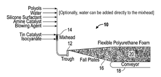 The invention relates to a polyol composition for use in preparing a flexible polyurethane foam and the foam produced using the polyol composition. The composition comprises a naturally derived polyol in combination with a synthetic polyol of high molecular weight. The invention relates to a polyol composition for use in preparing a flexible polyurethane foam and the foam produced using the polyol composition. The composition comprises a naturally derived polyol in combination with a synthetic polyol of high molecular weight. |
||
| ISOCYANATE-REACTIVE COMPOSITIONS, RIGID POLYURETHANE FOAMS AND METHODS FOR THEIR PRODUCTION | ||
| Inventor(s) | Parks, B. W. and Adkins, R. L. | |
| Sources | US Pat. App.: 20260286035 | |
| Corporate/Assignee | Covestro LLC | |
| Publication Date | Sep. 24, 2026 | |
| Abstract: | ||
| Isocyanate-reactive compositions and thermally insulating rigid polyurethane foams, such as those that can be used as a thermal insulation medium in the construction of refrigerated storage devices, are disclosed. The compositions include a halogenated olefin blowing agent and a polymer polyol. The polymer polyol includes (1) a base polyol having an OH number of at least 200 mg KOH/g; and (2) polymer particles dispersed in the base polymer, wherein the polymer particles comprise the reaction product of an ethylenically unsaturated composition comprising an ethylenically unsaturated fluorinated compound. | ||
| FLEXIBLE AND SEMI-RIGID POLYIMIDE COMPRISING FOAMS WITH SUPERIOR HEAT RESISTANCE | ||
| Inventor(s) | Vendenbroeck, J. M., Joncheray, T. J., and Brassinne, J. F. S. | |
| Sources | US Pat. App.: 20260275063 | |
| Corporate/Assignee | Huntsman International LLC | |
| Publication Date | Sep. 17, 2026 | |
| Abstract: | ||
 The present invention relates to reactive mixtures and processes for forming isocyanate based flexible and semi-rigid polyimide comprising foams which have high temperature resistance with good acoustic properties. The present invention relates to reactive mixtures and processes for forming isocyanate based flexible and semi-rigid polyimide comprising foams which have high temperature resistance with good acoustic properties. |
||
| SOFT POLYURETHANE FOAM, METHOD FOR PRODUCING SAME, AND MULTILAYER BODY | ||
| Inventor(s) | Yamaguchi, S. and Minowa, R. | |
| Sources | US Pat. App.: 20260273893 | |
| Corporate/Assignee | Toyo Quality One Corp. | |
| Publication Date | Sep. 17, 2026 | |
| Abstract: | ||
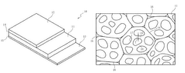 A soft polyurethane foam includes: cells, the number of which is 20 to 40/25 mm; and air bubbles leading to the cells and having an opening proportion of 90% or higher. A multilayer body includes a skin and the soft polyurethane foam adhered to the skin, and an air permeability of the multilayer body with respect to an air permeability of the skin is 74% or higher. A method for producing the soft polyurethane foam includes: a first mixing step of mixing a gas with an aid; and a second mixing step of obtaining a mixture by mixing the aid with which the gas has been mixed, a foaming agent, a polyol, and an isocyanate. A soft polyurethane foam includes: cells, the number of which is 20 to 40/25 mm; and air bubbles leading to the cells and having an opening proportion of 90% or higher. A multilayer body includes a skin and the soft polyurethane foam adhered to the skin, and an air permeability of the multilayer body with respect to an air permeability of the skin is 74% or higher. A method for producing the soft polyurethane foam includes: a first mixing step of mixing a gas with an aid; and a second mixing step of obtaining a mixture by mixing the aid with which the gas has been mixed, a foaming agent, a polyol, and an isocyanate. |
||
| IMIDE-CONTAINING POLYESTER POLYOLS AND INTUMESCENT RIGID FOAMS | ||
| Inventor(s) | Liskey, C. W., Kaplan, W. A., and Yocius, D. | |
| Sources | US Pat. App.: 20260265445 | |
| Corporate/Assignee | Stepan Co. | |
| Publication Date | Sep. 10, 2026 | |
| Abstract: | ||
| An aromatic polyester polyol having a nominal functionality of at least about 2 is produced from the esterification reaction of a phthalate-based composition containing less than 50 mol % of ortho-phthalic acid or phthalic anhydride, with a hydroxyl material containing at least 20 mol % of at least one branched aliphatic diol, and optionally transesterified with at least one hydrophobic material. The polyester polyol has improved shelf-life stability as demonstrated by the polyester polyol remaining clear and homogeneous for at least 6 months when stored at room temperature. The polyester polyol, when incorporated into a polyol foam-forming resin composition in an amount of at least 40 wt %, results in polyurethane and polyisocyanurate foams that exhibit low smoke and weight loss upon burning conditions. | ||
| METHOD FOR PREPARING A POLYURETHANE FOAM | ||
| Inventor(s) | Landais, Y., Cramail, H., Ogbu, I. M., Vidil, T., Robert, F., Grau, E., and Jaussaud, Q. | |
| Sources | US Pat. App.: 20260265478 | |
| Corporate/Assignee | Universite de Bordeaux Institut Polytechnique de Bordeaux and Centre National de la Recherche Scientifique | |
| Publication Date | Sep. 10, 2026 | |
| Abstract: | ||
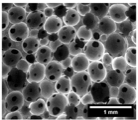 The invention relates to a method for preparing a polyurethane foam (I) comprising a) reacting, at a temperature ranging from 60 to 150° C., at least one poly oxamic acid (III) with at least one polyol (II) in the presence of a hypervalent iodine oxidant; b) foaming the polyurethane (I) obtained in step a) in the presence of carbon dioxide. The invention also relates to a polyurethane foam (I) obtained according to the method of the invention. The invention relates to a method for preparing a polyurethane foam (I) comprising a) reacting, at a temperature ranging from 60 to 150° C., at least one poly oxamic acid (III) with at least one polyol (II) in the presence of a hypervalent iodine oxidant; b) foaming the polyurethane (I) obtained in step a) in the presence of carbon dioxide. The invention also relates to a polyurethane foam (I) obtained according to the method of the invention. |
||
| POLYURETHANE FOAM HAVING TUNEABLE POROSITY IN WIDE RANGE | ||
| Inventor(s) | Kumar, A., Pradhan, P. M. S., and Tatake, P. A. | |
| Sources | US Pat. App.: 20260265443 | |
| Corporate/Assignee | Shell USA, Inc. | |
| Publication Date | Sep. 10, 2026 | |
| Abstract: | ||
| The invention relates to a process for preparing a polyurethane foam, comprising reacting a polyisocyanate with a polyether polyol component a) in the presence of a blowing agent, wherein polyether polyol component a) comprises: a1) a first polyether polyol having a molecular weight of from 300 to 1,500 g/mol, a hydroxyl value of from 100 to 650 mg KOH/g and a propylene oxide content above 50 wt. %; and a2) a second polyether polyol having a molecular weight of from 500 to 1,700 g/mol, a hydroxyl value of from 50 to 650 mg KOH/g, an ethylene oxide content above 30 wt. %, a propylene oxide content below 50 wt. % and a primary hydroxyl content below 40%. | ||
| PRODUCTION OF FLAME-RETARDENT POLYURETHANE FOAM | ||
| Inventor(s) | Suchan, M. and Schiller, C. | |
| Sources | US Pat. App.: 20260265440 | |
| Corporate/Assignee | Evonik Operations GmbH | |
| Publication Date | Sep. 10, 2026 | |
| Abstract: | ||
| Composition for the production of PU foam, preferably rigid PU foam, comprising at least one halogen-free polyester polyol and at least one halogenated polyol, at least one physical blowing agent, at least one flame retardant selected from (a) the group of the phosphoric acid esters, preferably TCPP, TEP and/or TCEP, especially TCPP and/or TEP, and/or (b) the group of the phosphonates, preferably DMMP and/or DMPP, red phosphorus, | ||
| PRODUCTION OF POLYURETHANE FOAM | ||
| Inventor(s) | Glos, M., Grimminger, J., Ferenz, M., and Metz, T. | |
| Sources | US Pat. App.: 20260258247 | |
| Corporate/Assignee | Evonik Operations GmbH | |
| Publication Date | Sep. 3, 2026 | |
| Abstract: | ||
| What are described are (a) a composition suitable for production of polyurethane foam, comprising at least one polyisocyanate component, a polyol component, optionally a catalyst that catalyses the formation of a urethane or isocyanurate bond, optionally blowing agents, where the composition additionally comprises hydrocarbons HC, Si-free surfactant and optional polyalkylsiloxane, (b) a process for producing polyurethane foam using hydrocarbons HC, Si-free surfactant and optional polyalkylsiloxanes, (c) the polyurethane foam thus obtainable and (d) the use thereof. | ||
| ADDITIVES FOR POLYURETHANE FOAM POLYOL BLENDS AND POLYURETHANE FOAMS COMPRISING THE SAME | ||
| Inventor(s) | Stengel, J., Chaffanjon, P., and Davis, D. | |
| Sources | US Pat. App.: 20260258246 | |
| Corporate/Assignee | Momentive Performance Materials Inc. | |
| Publication Date | Sep. 3, 2026 | |
| Abstract: | ||
| The present technology provides a method of manufacturing a rigid polyurethane foam having a low thermal conductivity from a foam composition comprising a polyol, an isocyanate, a polyurethane catalyst, a surfactant, and a compatibility additive. The compatibility additive enhances the compatibility of one or more components in the foam forming composition with the polyol component. | ||
g. Microcellular and Expanded Particle
| FOAMED ELECTRIC WIRE, COMMUNICATION CABLE, AND METHOD OF MANUFACTURING THE SAME | ||
| Inventor(s) | Tashiro, K. and Yamada, M. | |
| Sources | US Pat.: 12,749,594 | |
| Corporate/Assignee | Yazaki Corp. | |
| Publication Date | Sep. 29, 2026 | |
| Abstract: | ||
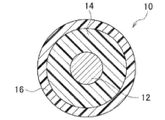 A foamed electric wire includes a conductor, and a covering layer that covers the conductor and is constituted by one or more layers. At least one layer of the covering layer is a foamed covering layer made of a resin composition containing a polypropylene resin, that is formed by foam extrusion molding. An average foam diameter of the foamed covering layer is 30 μm or less in a cross-sectional direction, and 60 μm or less in a longitudinal direction. A foaming ratio of the foamed covering layer is 25% or more and 55% or less. An arithmetic average height of a surface of the foamed electric wire is 20 μm or less. A foamed electric wire includes a conductor, and a covering layer that covers the conductor and is constituted by one or more layers. At least one layer of the covering layer is a foamed covering layer made of a resin composition containing a polypropylene resin, that is formed by foam extrusion molding. An average foam diameter of the foamed covering layer is 30 μm or less in a cross-sectional direction, and 60 μm or less in a longitudinal direction. A foaming ratio of the foamed covering layer is 25% or more and 55% or less. An arithmetic average height of a surface of the foamed electric wire is 20 μm or less. |
||
| POLYETHYLENE RESIN FOAMED PARTICLE, AND METHOD FOR PRODUCING SAME | ||
| Inventor(s) | Hayashi, T. and Hira, A. | |
| Sources | US Pat.: 12,735,545 | |
| Corporate/Assignee | JSP Corp. | |
| Publication Date | Sep. 15, 2026 | |
| Abstract: | ||
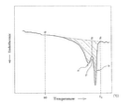 Polyethylene resin foamed particles according to the present invention are obtained by using, as a base material resin, a non-crosslinked linear low density polyethylene. The linear low density polyethylene is a copolymer of ethylene and an α-olefin having 8 carbon atoms, and has a melt flow rate and a density in specified ranges. The foamed particle has an average foam size within a specified range, and has a crystal structure that causes an intrinsic peak and a high temperature peak to appear in the first round of a DSC curve obtained under a specific condition. The total fusion heat quantity (ΔH1) determined from the sum total of a fusion heat quantity (ΔHi) of the intrinsic peak and the fusion heat quantity (ΔHh) of the high temperature peak is within a specified range. Polyethylene resin foamed particles according to the present invention are obtained by using, as a base material resin, a non-crosslinked linear low density polyethylene. The linear low density polyethylene is a copolymer of ethylene and an α-olefin having 8 carbon atoms, and has a melt flow rate and a density in specified ranges. The foamed particle has an average foam size within a specified range, and has a crystal structure that causes an intrinsic peak and a high temperature peak to appear in the first round of a DSC curve obtained under a specific condition. The total fusion heat quantity (ΔH1) determined from the sum total of a fusion heat quantity (ΔHi) of the intrinsic peak and the fusion heat quantity (ΔHh) of the high temperature peak is within a specified range. |
||
| TOOL, TOOL SYSTEM AND METHOD FOR THE PRODUCTION OF PARTICLE FOAM PARTS | ||
| Inventor(s) | Romanov, V. | |
| Sources | US Pat.: 12,722,329 | |
| Corporate/Assignee | Kurtz GmbH & Co. KG | |
| Publication Date | Sep. 1, 2026 | |
| Abstract: | ||
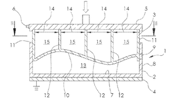 A tool for the production of particle foam parts through the welding of foam particles by means of electromagnetic waves comprises two mould halves which bound a mould cavity. At least one of the two mould halves is made of a material which is transparent to electromagnetic waves and has a boundary wall which bounds the mould cavity and one or more supports serving to support the boundary wall on a capacitor plate on the side facing away from the mould cavity and forming one or more hollow spaces. A tool system for the production of particle foam parts has the tool and at least one trimming body, which is designed for introduction into the hollow space or at least one of the hollow spaces. A method for the production of a particle foam part with the tool or tool system is also specified. A tool for the production of particle foam parts through the welding of foam particles by means of electromagnetic waves comprises two mould halves which bound a mould cavity. At least one of the two mould halves is made of a material which is transparent to electromagnetic waves and has a boundary wall which bounds the mould cavity and one or more supports serving to support the boundary wall on a capacitor plate on the side facing away from the mould cavity and forming one or more hollow spaces. A tool system for the production of particle foam parts has the tool and at least one trimming body, which is designed for introduction into the hollow space or at least one of the hollow spaces. A method for the production of a particle foam part with the tool or tool system is also specified. |
||
| COMPOSITE RESIN PARTICLES, FOAMABLE PARTICLES, FOAMED PARTICLES, MOLDED FOAM, AND PRODUCTION METHOD FOR COMPOSITE RESIN PARTICLES | ||
| Inventor(s) | Isayama, A. and Yamashita, M. | |
| Sources | US Pat. App.: 20260286080 | |
| Corporate/Assignee | Sekisui Kasei Co., Ltd. | |
| Publication Date | Sep. 24, 2026 | |
| Abstract: | ||
| An object of the present invention is to provide composite resin particles that can give a foam molded body having excellent strength without undergoing an annealing step in the production of the composite resin particles, and to also provide foam particles that allow relatively fast dissipation of a foaming agent and can reduce the molding cycle of the foam molded body. The present invention relates to the following polystyrene-based composite resin particles (C), Polystyrene-based composite resin particles (C) for producing a foam molded body, the composite resin particles (C) comprising a polyolefin-based resin and a polystyrene-based resin at a mass ratio of 10:90 to 50:50, wherein in an image of the composite resin particles (C) obtained by the following method, (1) a bicontinuous structure of the polyolefin-based resin and the polystyrene-based resin is observed, (2) one or more polystyrene-based resin fine particles having a particle size of 1.0 μm or more are observed, and (3) the area ratio of the polystyrene-based resin fine particles having a particle size of 1.0 μm or more is 1 to 50%. Image acquisition method: The composite resin particles (C) are each sliced along a line passing through the center of the particle, and the resulting thin film is photographed with a transmission electron microscope to obtain an image of a square area having sides of 10 μm and including the center of the particle. | ||
No comments yet.